Case's Corner Historic District

Why it's listed
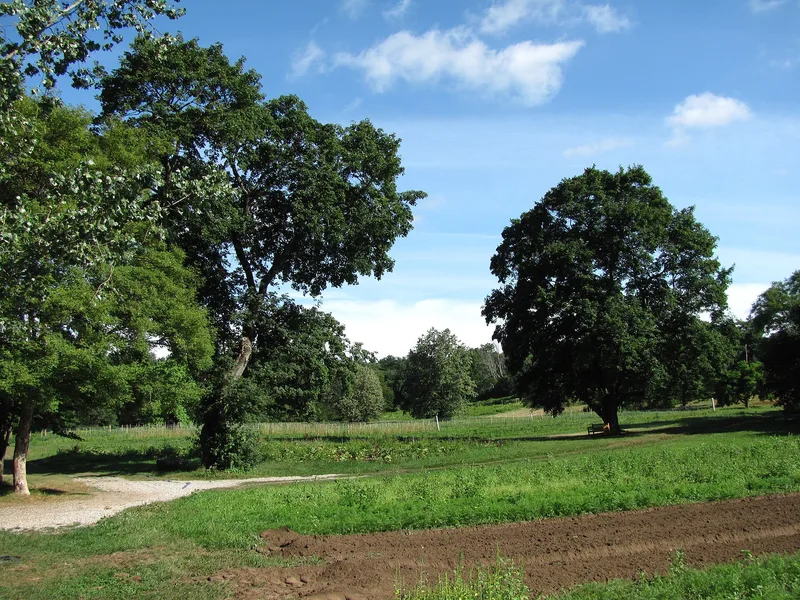
Case's Corner is a 190-acre area in the center of Weston, Massachusetts, where Wellesley, School, Ash and Newton Streets meet. It combines houses, barns, school buildings, fields, gardens and woodland, with buildings dating from about 1740 to 1953. Early farmhouses, a late 19th century estate mansion, estate worker housing and turn-of-the-century middle class homes reflect the town's shift from agriculture to suburb. Architectural examples range from Colonial and Federal to Greek Revival, Italianate, Queen Anne and Colonial Revival. A cohesive northern neighborhood of small frame houses gives a village feel. Much of the southern land belonged to the Case family. Marian Case ran Hillcrest Farm and later Hillcrest Gardens, a model farm and school of agriculture that employed local boys and later became a center for display gardens and plant introduction. Specimen trees, a rhododendron garden, an orchard and notable 1913 stone walls survive, along with a 35-acre town field still farmed. The district includes 88 contributing and two noncontributing resources.
Machine-generated summary. This summary was generated by a language model from the official nomination document and has not been reviewed line by line by an editor. It may contain errors. Check the source document before relying on any detail. Source: nomination document (PDF) · catalog entry. Generated October 2026 (model claude-sonnet-5-5, prompt v1.0-2026-10-29).
| Styles | Colonial, Federal, Greek Revival, Italianate, Queen Anne, Shingle Style, Colonial Revival, English Cottage (no single architectural theme) |
|---|---|
| Areas of significance | Agriculture, Architecture, Community Planning and Development, Education |
| Acreage | 190 |
| Boundary source | NPS cultural-resource GIS polygon |
| Full listing page | Case's Corner Historic District (property record) |
What listing means for this property
This is a historic district. Buildings within its boundary are either contributing (they add to the district's significance) or non-contributing. Owners of contributing income-producing buildings can claim the 20% federal rehabilitation tax credit; homeowners should look at state credits. National Register districts impose no design review by themselves; a local historic district ordinance, if one exists, does (the difference explained).
General information, not legal or tax advice. Rules change; confirm with your State Historic Preservation Office or a qualified adviser.