Canton Corner Historic District

Why it's listed
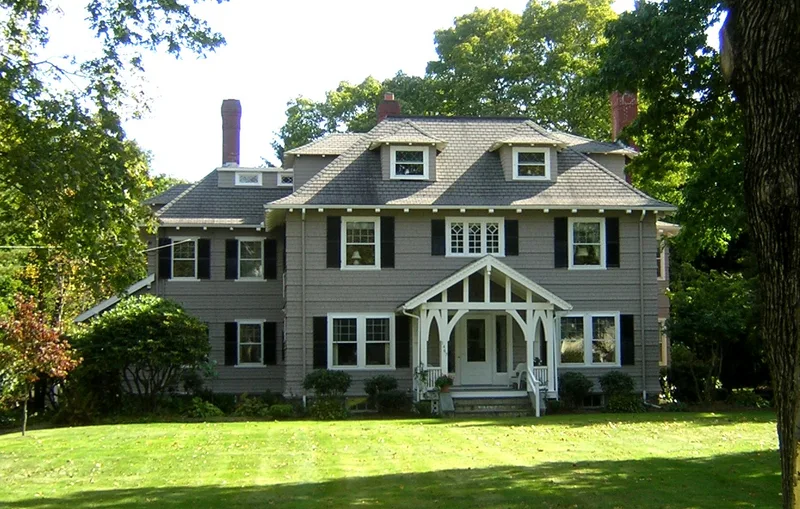
Canton Corner is a village-center historic district in Canton, Massachusetts, centered on Washington Street and Pleasant Street. It includes 67 contributing resources, among them houses, a church, a former tavern, barns, cemeteries and park land. The oldest buildings are Colonial dwellings, including the David Tilden House of about 1725. Federal-period houses such as the Downes and Hewitt houses, the 1820 Downes Tavern and the 1809 Pequitside estate form the core of the district. The 1824 First Parish church combines Greek Revival and Gothic Revival elements and holds a bell cast by Paul Revere & Son. The district is also linked to the Draper family. Thomas Draper bought the Withington House in 1851 and set up hand-powered knitting machines behind it, starting woolen knitting in Canton. His brother James joined him that year, and later generations of the family left estate properties in the district. Pequitside's 33 acres are now town-owned and used for municipal purposes and recreation.
Machine-generated summary. This summary was generated by a language model from the official nomination document and has not been reviewed line by line by an editor. It may contain errors. Check the source document before relying on any detail. Source: nomination document (PDF) · catalog entry. Generated October 2026 (model claude-sonnet-5-5, prompt v1.0-2026-10-29).
| Styles | Colonial, Federal, Greek Revival |
|---|---|
| Areas of significance | Architecture, Community Planning and Development, Landscape Architecture, Social History |
| Acreage | 170 |
| Boundary source | NPS cultural-resource GIS polygon |
| Full listing page | Canton Corner Historic District (property record) |
What listing means for this property
This is a historic district. Buildings within its boundary are either contributing (they add to the district's significance) or non-contributing. Owners of contributing income-producing buildings can claim the 20% federal rehabilitation tax credit; homeowners should look at state credits. National Register districts impose no design review by themselves; a local historic district ordinance, if one exists, does (the difference explained).
General information, not legal or tax advice. Rules change; confirm with your State Historic Preservation Office or a qualified adviser.