Camp Kiwanee Historic District

Why it's listed
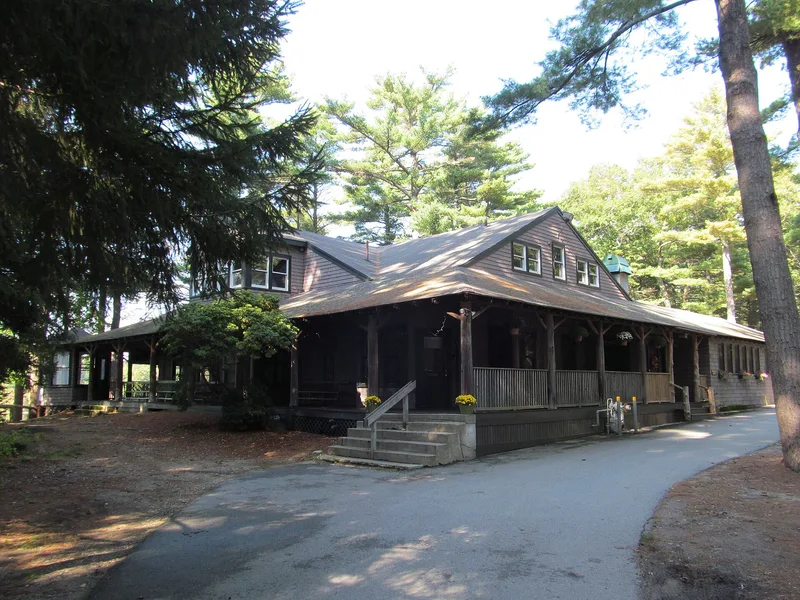
Camp Kiwanee is a 68-acre woodland on the eastern shore of Maquan Pond in Hanson, Massachusetts. It began in 1899, when Alice Burrage bought land for a family summer estate called The Needles, and her husband, industrialist Albert Cameron Burrage, added parcels through 1905. In 1907 Burrage built the oldest surviving structures: a quarry-faced concrete block gatehouse lodge with Tudor Revival touches, a garage, and a rustic wood-frame main bungalow. A narrow entry road lined with maples, reportedly finished with a concrete roadbed, remains a defining part of his design. The Greater Boston Council of the Camp Fire Girls bought the estate in 1922 and added land in 1939 and 1958. Most of the camp's single-story seasonal cabins and recreation buildings date from the 1930s to early 1950s. The Town of Hanson acquired the property in 1979 and has maintained it with few changes. The district includes 56 contributing resources.
Machine-generated summary. This summary was generated by a language model from the official nomination document and has not been reviewed line by line by an editor. It may contain errors. Check the source document before relying on any detail. Source: nomination document (PDF) · catalog entry. Generated October 2026 (model claude-sonnet-5-5, prompt v1.0-2026-10-29).
| Styles | Late Victorian: Shingle Style; Late 19th and 20th Century Revival: Tudor Revival |
|---|---|
| Areas of significance | Entertainment/Recreation, Architecture, Community Planning and Development, Social History |
| Boundary source | NPS cultural-resource GIS polygon |
| Full listing page | Camp Kiwanee Historic District (property record) |
What listing means for this property
This is a historic district. Buildings within its boundary are either contributing (they add to the district's significance) or non-contributing. Owners of contributing income-producing buildings can claim the 20% federal rehabilitation tax credit; homeowners should look at state credits. National Register districts impose no design review by themselves; a local historic district ordinance, if one exists, does (the difference explained).
General information, not legal or tax advice. Rules change; confirm with your State Historic Preservation Office or a qualified adviser.