Bulfinch Triangle Historic District

Why it's listed
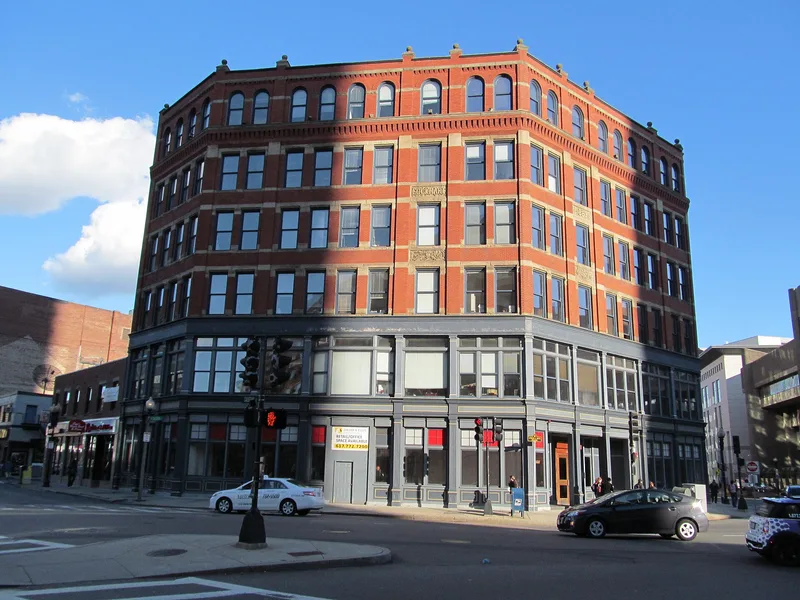
Set opposite North Station in downtown Boston, this seven-acre district preserves the western half of a triangular street plan drawn up by Charles Bulfinch in 1804. The land was once a tidal cove and mill pond, filled beginning in 1807 with earth taken from nearby hills. Railroad depots near Causeway Street drew hotels, stables and, by the 1870s, a concentration of furniture makers and showrooms. Most of the fifty-nine structures are five- and six-story masonry commercial buildings from the 1870s to 1915. They include the Second Empire Paine Furniture Company Building of 1871 by Gridley J. F. Bryant, the Romanesque Revival Peter Brigham Building, the Lockhart Building of 1887, and Beaux Arts blocks by Stephen Codman. Later transit and highway construction isolated the area and helped protect its character. Losses have mainly been to parking lots, and alterations to surviving buildings are mostly limited to storefronts. The district was listed for its architecture, its furniture-trade history and its Bulfinch street plan.
Machine-generated summary. This summary was generated by a language model from the official nomination document and has not been reviewed line by line by an editor. It may contain errors. Check the source document before relying on any detail. Source: nomination document (PDF) · catalog entry. Generated October 2026 (model claude-sonnet-5-5, prompt v1.0-2026-10-29).
| Period of significance | 1870-1915 |
|---|---|
| Styles | Second Empire, Romanesque Revival, Beaux Arts, and Victorian commercial |
| Areas of significance | Industry, Community Planning and Development, Commerce, Architecture |
| Acreage | 7 |
| Boundary source | NPS cultural-resource GIS polygon |
| Full listing page | Bulfinch Triangle Historic District (property record) |
What listing means for this property
This is a historic district. Buildings within its boundary are either contributing (they add to the district's significance) or non-contributing. Owners of contributing income-producing buildings can claim the 20% federal rehabilitation tax credit; homeowners should look at state credits. National Register districts impose no design review by themselves; a local historic district ordinance, if one exists, does (the difference explained).
General information, not legal or tax advice. Rules change; confirm with your State Historic Preservation Office or a qualified adviser.