Bradstreet Historic District

Why it's listed
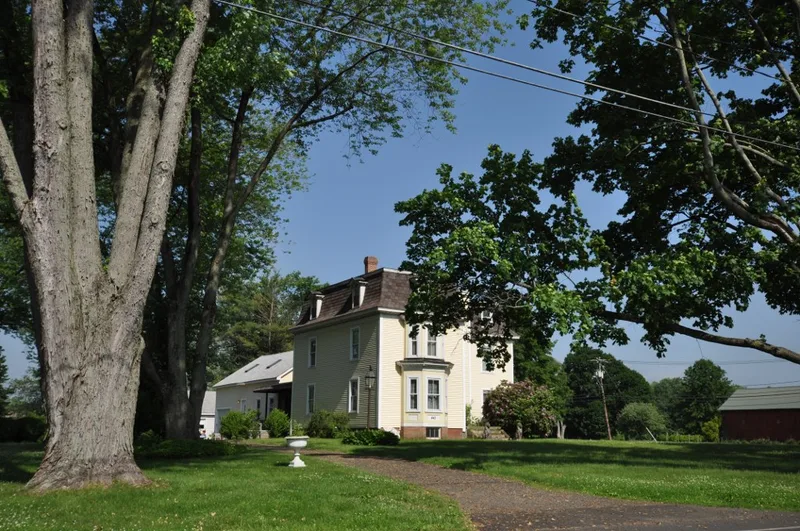
Bradstreet is a farming village in the northeast corner of Hatfield, Massachusetts, laid out on the flat floodplain of the Connecticut River. Houses and farm buildings sit close to Main Street and Depot Road, with broad open fields behind them where vegetables such as corn, squash and potatoes are still grown. Most buildings date from the 19th century and are wood-frame dwellings, tenant houses, barns and onion or tobacco storage buildings. Styles include Greek Revival houses such as those built by Edwin Harris and Gilbert Morton, and Italianate houses such as the Leland Wight House of 1868 with its cupola and paired brackets. The field pattern goes back to 1682, when land north of the Great Meadow was divided among Hatfield's proprietors into long rectangular lots, still visible along Bashan Road and Old Farms Path. The district is notable for keeping this agricultural landscape and its collection of farm buildings, despite some vinyl siding and modern infill.
Machine-generated summary. This summary was generated by a language model from the official nomination document and has not been reviewed line by line by an editor. It may contain errors. Check the source document before relying on any detail. Source: nomination document (PDF) · catalog entry. Generated October 2026 (model claude-sonnet-5-5, prompt v1.0-2026-10-29).
| Styles | Greek Revival; Italianate and Second Empire; Colonial Revival |
|---|---|
| Areas of significance | Architecture, Agriculture, Exploration/Settlement |
| Acreage | 266 |
| Boundary source | NPS cultural-resource GIS polygon |
| Full listing page | Bradstreet Historic District (property record) |
What listing means for this property
This is a historic district. Buildings within its boundary are either contributing (they add to the district's significance) or non-contributing. Owners of contributing income-producing buildings can claim the 20% federal rehabilitation tax credit; homeowners should look at state credits. National Register districts impose no design review by themselves; a local historic district ordinance, if one exists, does (the difference explained).
General information, not legal or tax advice. Rules change; confirm with your State Historic Preservation Office or a qualified adviser.