Bradford-Union Street Historic District

Why it's listed
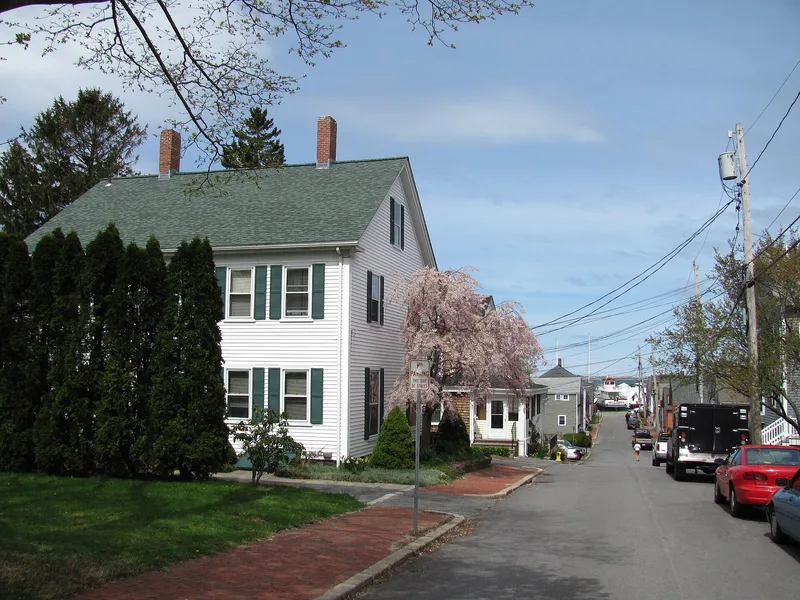
Sloping down toward Plymouth Harbor, this neighborhood of about thirty-nine buildings was once home to the mariners and tradesmen who supported the town's maritime economy. Most buildings are modest 19th-century houses: Greek Revival dwellings built for sea captains, small Cape Cod cottages, and a group of compact Gothic Revival cottages with carved eave trim. Many of the cottages came from a late-1840s development by Ansel Harlow, in partnership with Captain Samuel Doten, and were sold largely to Irish immigrants. Cod fishing, flake yards, fish houses, boatbuilding and an iron foundry shaped the area, and the surviving brick portion of the foundry is now part of a marine company. Economic decline set in late in the century, and by the 1930s the waterfront was no longer an active commercial harbor. Later infill and a yacht club have replaced much of the industrial fabric, but the dense, cohesive 19th-century streetscape remains, which supported the district's listing for its history and architecture.
Machine-generated summary. This summary was generated by a language model from the official nomination document and has not been reviewed line by line by an editor. It may contain errors. Check the source document before relying on any detail. Source: nomination document (PDF) · catalog entry. Generated October 2026 (model claude-sonnet-5-5, prompt v1.0-2026-10-29).
| Period of significance | 1700-1899 |
|---|---|
| Styles | Vernacular Greek Revival, Gothic Revival cottages, Cape and Georgian-influenced buildings |
| Areas of significance | Industry, Commerce, Architecture |
| Acreage | 7 |
| Boundary source | NPS cultural-resource GIS polygon |
| Full listing page | Bradford-Union Street Historic District (property record) |
What listing means for this property
This is a historic district. Buildings within its boundary are either contributing (they add to the district's significance) or non-contributing. Owners of contributing income-producing buildings can claim the 20% federal rehabilitation tax credit; homeowners should look at state credits. National Register districts impose no design review by themselves; a local historic district ordinance, if one exists, does (the difference explained).
General information, not legal or tax advice. Rules change; confirm with your State Historic Preservation Office or a qualified adviser.