Bow Street Historic District

The National Park Service has not published a boundary polygon for this district; the map shows the listed properties inside it and the district's reference point.
Why it's listed
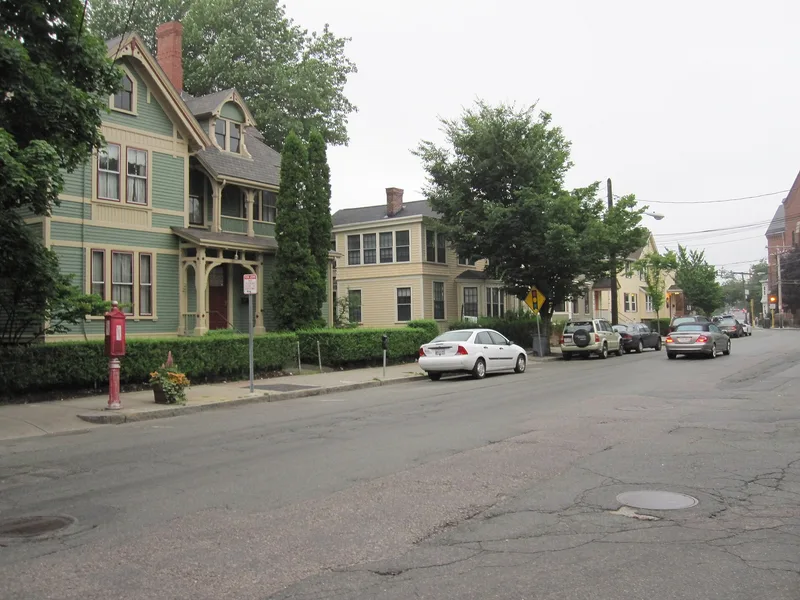
Bow Street in Somerville, Massachusetts, is a compact district of seventeen buildings on about three acres, mixing churches, municipal, commercial and residential structures from the late nineteenth century. Its highlights include the Prospect Hill Congregational Church, designed by Henry S. McKay in 1887 in the Richardsonian Romanesque style, the Gothic Revival First United Methodist Church, the 1874 Police Station, the curved Faulkner Apartment Block, and a row of Stick Style cottages known as Doctors' Row. The street follows an early cart track and took its bowed shape from nearby marshland. It was travelled during the events of April 1775, when British troops stopped for water on their way to Lexington. After street railways arrived, doctors who founded Somerville Hospital settled here. Many buildings along Somerville Avenue were heavily altered in the twentieth century, but Bow Street kept its streetscape and architectural integrity, and it was recognized as one of the best late nineteenth-century groupings in the city.
Machine-generated summary. This summary was generated by a language model from the official nomination document and has not been reviewed line by line by an editor. It may contain errors. Check the source document before relying on any detail. Source: nomination document (PDF) · catalog entry. Generated October 2026 (model claude-sonnet-5-5, prompt v1.0-2026-10-29).
| Styles | Late nineteenth-century mix: Richardsonian Romanesque, Stick Style, Gothic Revival, Second Empire/mansard, Italianate, Queen Anne, Federal Revival |
|---|---|
| Areas of significance | Architecture |
| Acreage | 3 |
| Boundary source | not published |
| Full listing page | Bow Street Historic District (property record) |
What listing means for this property
This is a historic district. Buildings within its boundary are either contributing (they add to the district's significance) or non-contributing. Owners of contributing income-producing buildings can claim the 20% federal rehabilitation tax credit; homeowners should look at state credits. National Register districts impose no design review by themselves; a local historic district ordinance, if one exists, does (the difference explained).
General information, not legal or tax advice. Rules change; confirm with your State Historic Preservation Office or a qualified adviser.