Boston Manufacturing Company

Why it's listed
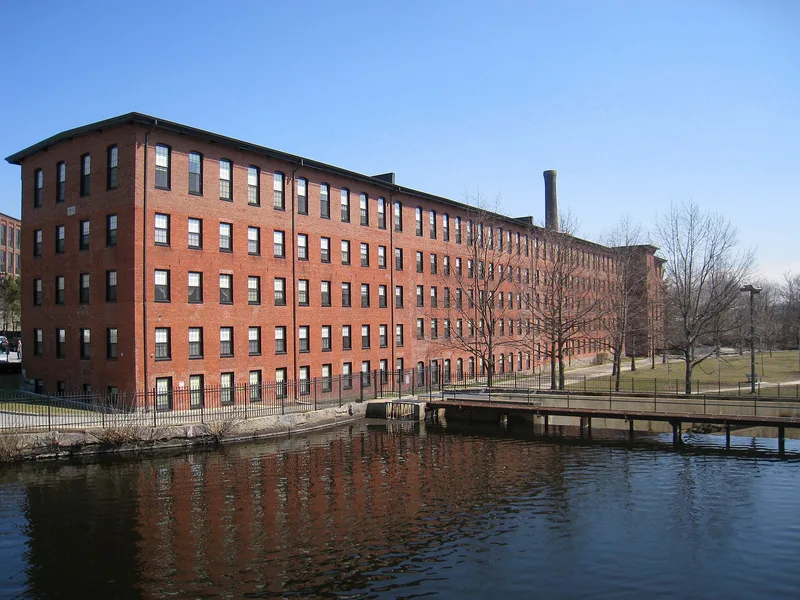
This mill complex on Moody Street in Waltham sits between the railroad and the Charles River. It holds sixteen buildings erected from 1814 to 1921, along with a granite dam built in 1847 and raised in 1850, and traces of the race that carried water to the mills. The Boston Manufacturing Company began here in 1813 and produced its first cloth in early 1815. Historians quoted in the document call it the first truly modern American factory, because it brought spinning and weaving together under one management and one roof. Paul Moody's machine shop developed power looms and other equipment. Later brick mills, a picker house, boiler and engine houses, and a finishing building show growth through the nineteenth century, with the 1873-80 mill the largest. The district extends an earlier landmark designation that covered only part of the site, since most of the surviving industrial space dates after 1850. Several altered buildings are noted as no longer contributing.
Machine-generated summary. This summary was generated by a language model from the official nomination document and has not been reviewed line by line by an editor. It may contain errors. Check the source document before relying on any detail. Source: nomination document (PDF) · catalog entry. Generated October 2026 (model claude-sonnet-5-5, prompt v1.0-2026-10-29).
| Period of significance | 1813-1922 |
|---|---|
| Areas of significance | Industry, Architecture, Invention |
| Acreage | 2.5 |
| Boundary source | NPS cultural-resource GIS polygon |
| Full listing page | Boston Manufacturing Company (property record) |
What listing means for this property
This is a historic district. Buildings within its boundary are either contributing (they add to the district's significance) or non-contributing. Owners of contributing income-producing buildings can claim the 20% federal rehabilitation tax credit; homeowners should look at state credits. National Register districts impose no design review by themselves; a local historic district ordinance, if one exists, does (the difference explained).
General information, not legal or tax advice. Rules change; confirm with your State Historic Preservation Office or a qualified adviser.