Blackstone Manufacturing Company Historic District

Why it's listed
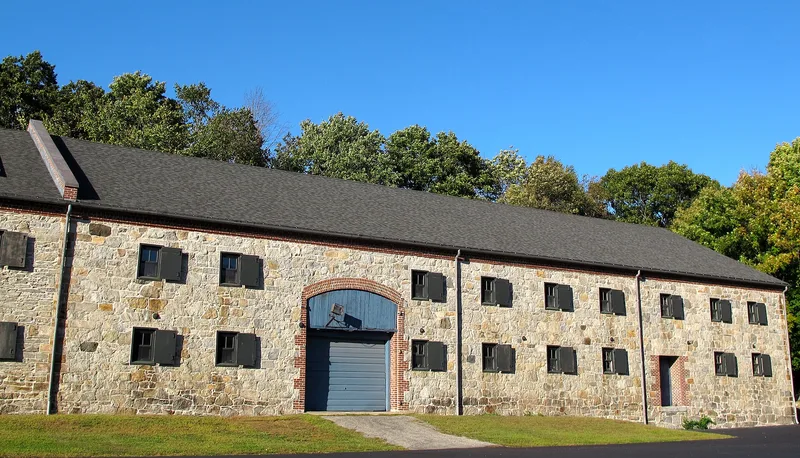
Blackstone Village, in the southern part of the town of Blackstone, Massachusetts, grew around a textile company founded on the Blackstone River. This district covers the company's nineteenth-century holdings: tenement blocks, single-family houses, a church, a store with a meeting hall, and the open site of its mills. Buildings date from 1809, and most were finished by 1866. The company built at least forty of them, with much of the work from the 1840s to the 1860s done by local craftsmen Charles Aldrich and Allen Chase. Greek Revival is the predominant style, with modest detail such as boxed cornices and corner posts. Tenements were divided horizontally and vertically among many families. The 1861 brick Overseers Block and the 1866 brick blocks on Butler Street show later company housing. Remnants of headraces and tailraces and a stone mill building from 1844 mark the mill site, whose buildings were demolished in 1904. The district records how one company shaped a whole village.
Machine-generated summary. This summary was generated by a language model from the official nomination document and has not been reviewed line by line by an editor. It may contain errors. Check the source document before relying on any detail. Source: nomination document (PDF) · catalog entry. Generated October 2026 (model claude-sonnet-5-5, prompt v1.0-2026-10-29).
| Styles | Greek Revival, Italianate, Queen Anne, Colonial Revival |
|---|---|
| Areas of significance | Architecture, Historic - Non-Aboriginal, Community Planning and Development, Industry, Transportation |
| Acreage | 30 |
| Boundary source | NPS cultural-resource GIS polygon |
| Full listing page | Blackstone Manufacturing Company Historic District (property record) |
What listing means for this property
This is a historic district. Buildings within its boundary are either contributing (they add to the district's significance) or non-contributing. Owners of contributing income-producing buildings can claim the 20% federal rehabilitation tax credit; homeowners should look at state credits. National Register districts impose no design review by themselves; a local historic district ordinance, if one exists, does (the difference explained).
General information, not legal or tax advice. Rules change; confirm with your State Historic Preservation Office or a qualified adviser.