Bigelow Tavern Historic District

Why it's listed
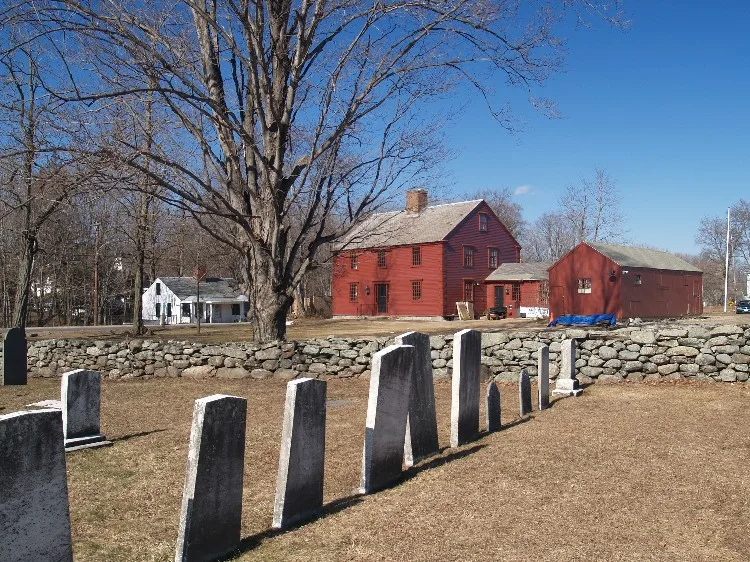
Along Worcester Street in West Boylston, a small group of buildings marks what was once the town's only commercial center. The district covers about 1.6 acres and holds three contributing buildings: Bigelow's Tavern, a store and a distillery, all dating from roughly the 1780s to 1811. Five later sheds and a garage do not contribute. The tavern is a timber-frame, two-and-a-half-story structure with a center chimney, granite foundation and a main facade facing south. Its molded cornice, corner quoins and projecting window caps relate it to the Georgian style. The store and distillery are simpler vernacular buildings. Originally owned by Major Ezra Beaman, the properties stayed in one family for four generations. Ezra Bigelow took out an innholder's permit in 1811 and operated the tavern until 1822 while serving as town clerk and selectman. Taverns like this one worked as local news exchanges and meeting places, and this one also warmed churchgoers between Sunday services. The district is valued for that early commercial and social role.
Machine-generated summary. This summary was generated by a language model from the official nomination document and has not been reviewed line by line by an editor. It may contain errors. Check the source document before relying on any detail. Source: nomination document (PDF) · catalog entry. Generated October 2026 (model claude-sonnet-5-5, prompt v1.0-2026-10-29).
| Styles | Colonial: Georgian; Early Republic: Federal; Vernacular |
|---|---|
| Areas of significance | Commerce, Exploration/Settlement, Architecture, Social History |
| Acreage | 1.6 |
| Boundary source | NPS cultural-resource GIS polygon |
| Full listing page | Bigelow Tavern Historic District (property record) |
What listing means for this property
This is a historic district. Buildings within its boundary are either contributing (they add to the district's significance) or non-contributing. Owners of contributing income-producing buildings can claim the 20% federal rehabilitation tax credit; homeowners should look at state credits. National Register districts impose no design review by themselves; a local historic district ordinance, if one exists, does (the difference explained).
General information, not legal or tax advice. Rules change; confirm with your State Historic Preservation Office or a qualified adviser.