Bidwell, Rev. Adonijah, House

Why it's listed
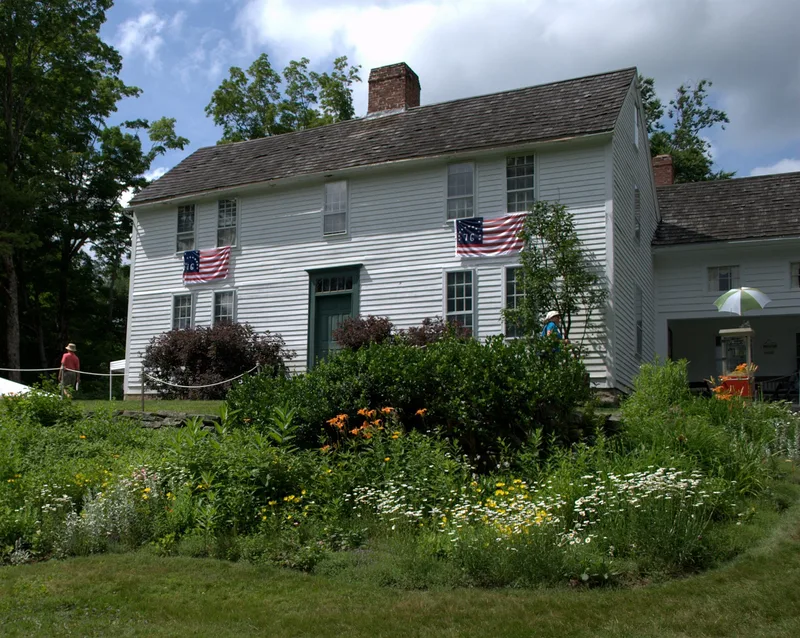
This 60-acre property in the Berkshire Mountains of Monterey, Massachusetts, combines a mid-18th century farmhouse with the foundation of a village's first church. The Rev. Adonijah Bidwell House, built in 1750, is a two-story saltbox with a massive central brick chimney, three rooms around the chimney and staircase, and extensive raised wood paneling. A horse barn ell was added around 1790 and a Greek Revival woodshed and carriage house around 1837. Bidwell was the first settled minister of Housatonic Township No. 1, served for thirty-four years, and ran a large farm. His sons held county, state and national offices. Later the Carrington family farmed the land from 1837 to 1913, and from 1914 to 1922 it hosted a summer artists' colony. The Meetinghouse, built in 1743, served both Tyringham and Monterey settlements until a new church and a separate Tyringham congregation led to its dismantling by about 1798. Its stone foundation and steps survive and may hold archaeological evidence.
Machine-generated summary. This summary was generated by a language model from the official nomination document and has not been reviewed line by line by an editor. It may contain errors. Check the source document before relying on any detail. Source: nomination document (PDF) · catalog entry. Generated October 2026 (model claude-sonnet-5-5, prompt v1.0-2026-10-29).
| Period of significance | 1700-1799 |
|---|---|
| Styles | Georgian "Saltbox" style, vernacular mid-18th century house with Greek Revival style woodshed and carriage house ell |
| Areas of significance | Agriculture, Historic - Non-Aboriginal, Exploration/Settlement, Architecture |
| Acreage | 60 |
| Boundary source | NPS cultural-resource GIS polygon |
| Full listing page | Bidwell, Rev. Adonijah, House (property record) |
What listing means for this property
This is a historic district. Buildings within its boundary are either contributing (they add to the district's significance) or non-contributing. Owners of contributing income-producing buildings can claim the 20% federal rehabilitation tax credit; homeowners should look at state credits. National Register districts impose no design review by themselves; a local historic district ordinance, if one exists, does (the difference explained).
General information, not legal or tax advice. Rules change; confirm with your State Historic Preservation Office or a qualified adviser.