Bellingham Square Historic District

Why it's listed
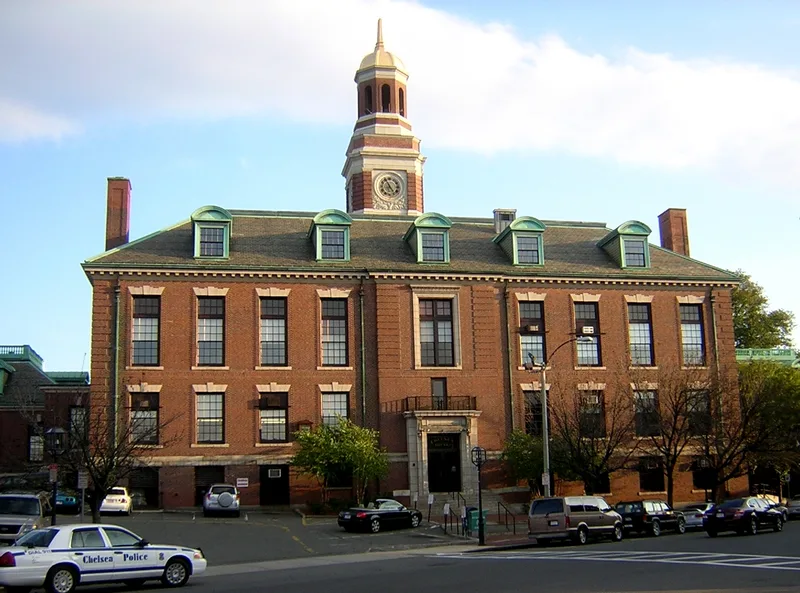
Bellingham Square is the civic and commercial heart of Chelsea, a small city just north of Boston. The district covers about 28 acres and 127 properties, nearly all built within twenty years after the Great Fire of 1908 destroyed almost every structure in the area. Reconstruction followed the old street pattern, with commercial blocks along Broadway, public buildings around the square, and working-class housing on side streets, including bowfront row houses and large apartment blocks. Brick buildings with Classical Revival detailing give the area a uniform character. City Hall by Peabody and Stearns, the Beaux Arts library by Guy Lowell, and a post office by James Knox Taylor set a high standard for design. The district is also significant for the planning controls adopted by a Board of Control after the fire, including zoning, building codes and fire limits, and for its association with the many Jewish property owners and immigrants who rebuilt the area. Eleven buildings are considered intrusions.
Machine-generated summary. This summary was generated by a language model from the official nomination document and has not been reviewed line by line by an editor. It may contain errors. Check the source document before relying on any detail. Source: nomination document (PDF) · catalog entry. Generated October 2026 (model claude-sonnet-5-5, prompt v1.0-2026-10-29).
| Period of significance | 1908-1929 |
|---|---|
| Styles | Classical Revival (Georgian Revival and Neo-Classical), with Beaux Arts and Gothic Revival buildings |
| Areas of significance | Community Planning and Development, Other, Commerce, European, Politics/Government, Architecture |
| Acreage | 28 |
| Boundary source | NPS cultural-resource GIS polygon |
| Full listing page | Bellingham Square Historic District (property record) |
What listing means for this property
This is a historic district. Buildings within its boundary are either contributing (they add to the district's significance) or non-contributing. Owners of contributing income-producing buildings can claim the 20% federal rehabilitation tax credit; homeowners should look at state credits. National Register districts impose no design review by themselves; a local historic district ordinance, if one exists, does (the difference explained).
General information, not legal or tax advice. Rules change; confirm with your State Historic Preservation Office or a qualified adviser.