Belchertown Center Historic District

Why it's listed
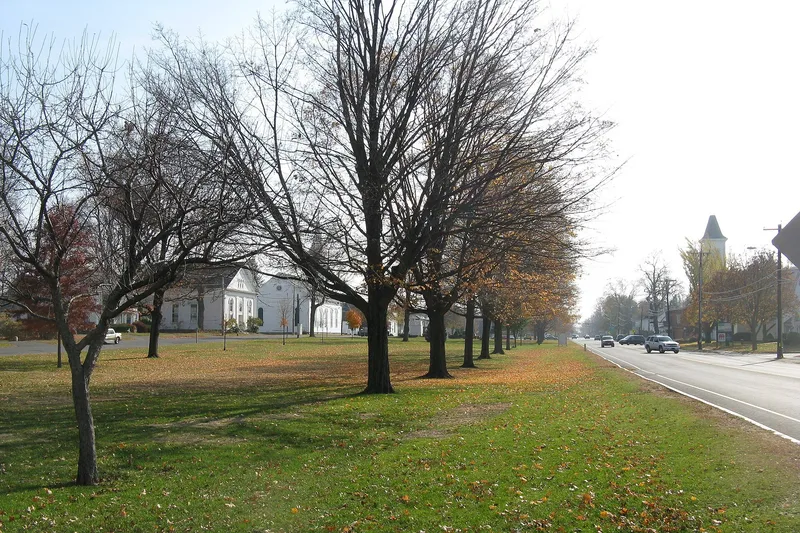
Belchertown Center is a T-shaped village core made up of the long Town Common, part of South Main Street and a section of Maple Street. Its 66 buildings are mostly 19th-century and range from Federal and Greek Revival houses to Gothic Revival, Queen Anne and mansard-roofed Victorian homes. Notable buildings include the Congregational Church of 1789-1792, later remodeled, the brownstone Clapp Memorial Library designed by Henry Kilburn, the 1827 Stone House, now a museum, and the 1923 Lawrence Memorial Hall. The district grew along the Bay Road, later the Northampton-Boston Stage Road, and the arrival of the railroad in 1853 shaped Maple Street. It has served since the late 18th century as the town's social, religious, commercial and political center. The Common is lined with mostly white wooden buildings, and a bandstand and Civil War monument stand on it. Its architecture and its role as the town's civic heart led to its listing under criteria A and C.
Machine-generated summary. This summary was generated by a language model from the official nomination document and has not been reviewed line by line by an editor. It may contain errors. Check the source document before relying on any detail. Source: nomination document (PDF) · catalog entry. Generated October 2026 (model claude-sonnet-5-5, prompt v1.0-2026-10-29).
| Styles | Federal, Greek Revival, Gothic Revival, Queen Anne, Romanesque, Italianate, mansard and other Victorian styles |
|---|---|
| Areas of significance | Industry, Commerce, Transportation, Literature, Architecture, Communications, Religion, Social History |
| Acreage | 52 |
| Boundary source | NPS cultural-resource GIS polygon |
| Full listing page | Belchertown Center Historic District (property record) |
What listing means for this property
This is a historic district. Buildings within its boundary are either contributing (they add to the district's significance) or non-contributing. Owners of contributing income-producing buildings can claim the 20% federal rehabilitation tax credit; homeowners should look at state credits. National Register districts impose no design review by themselves; a local historic district ordinance, if one exists, does (the difference explained).
General information, not legal or tax advice. Rules change; confirm with your State Historic Preservation Office or a qualified adviser.