Bedford Veterans Administration Hospital Historic District

Why it's listed
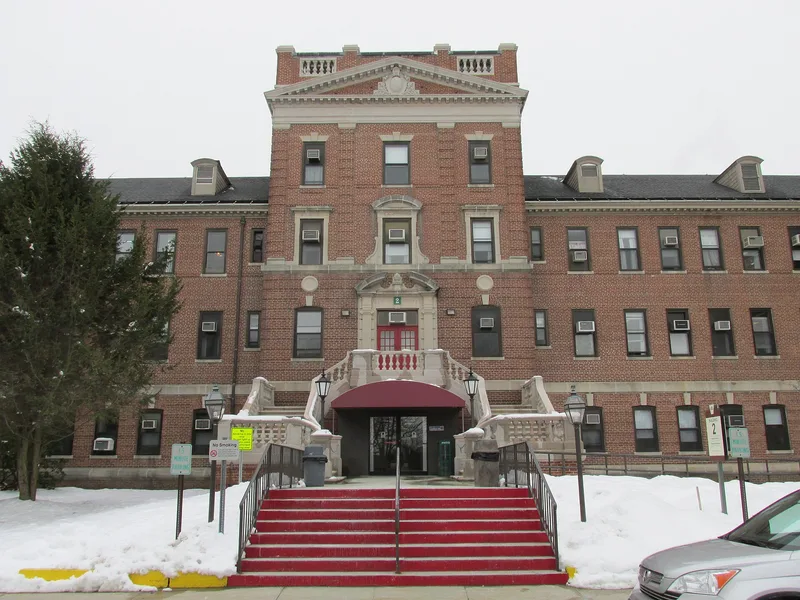
Bedford's veterans hospital campus, at 200 Springs Road, opened in 1928 as a neuropsychiatric facility and still provides health care to veterans. The historic district covers about 177 acres and contains 69 resources, of which 49 contributed to its 1927-1950 period of significance. The Main (Infirmary) Building of 1928 is the focal point, with a pedimented gable, brick quoins, pilasters and a modillion cornice. Other buildings are brick with Colonial Revival and Classical Revival details, and the amount of ornament follows each building's public role. Patient wards, a recreation building, a kitchen and dining hall, staff quarters and maintenance buildings are grouped by function around curving drives and a central courtyard. The site was large because patients did farm work as occupational therapy. Later additions from 1959 to 1962 are modern in design and noncontributing. The district was recognized as an excellent example of a Period II neuropsychiatric veterans hospital, with statewide significance.
Machine-generated summary. This summary was generated by a language model from the official nomination document and has not been reviewed line by line by an editor. It may contain errors. Check the source document before relying on any detail. Source: nomination document (PDF) · catalog entry. Generated October 2026 (model claude-sonnet-5-5, prompt v1.0-2026-10-29).
| Period of significance | 1927-1950 |
|---|---|
| Styles | Late 19th and 20th Century Revivals / Colonial Revival / Classical Revival |
| Areas of significance | Architecture, Health/Medicine, Politics/Government |
| Acreage | 177 |
| Boundary source | NPS cultural-resource GIS polygon |
| Full listing page | Bedford Veterans Administration Hospital Historic District (property record) |
What listing means for this property
This is a historic district. Buildings within its boundary are either contributing (they add to the district's significance) or non-contributing. Owners of contributing income-producing buildings can claim the 20% federal rehabilitation tax credit; homeowners should look at state credits. National Register districts impose no design review by themselves; a local historic district ordinance, if one exists, does (the difference explained).
General information, not legal or tax advice. Rules change; confirm with your State Historic Preservation Office or a qualified adviser.