Beaconsfield Terraces Historic District

Why it's listed
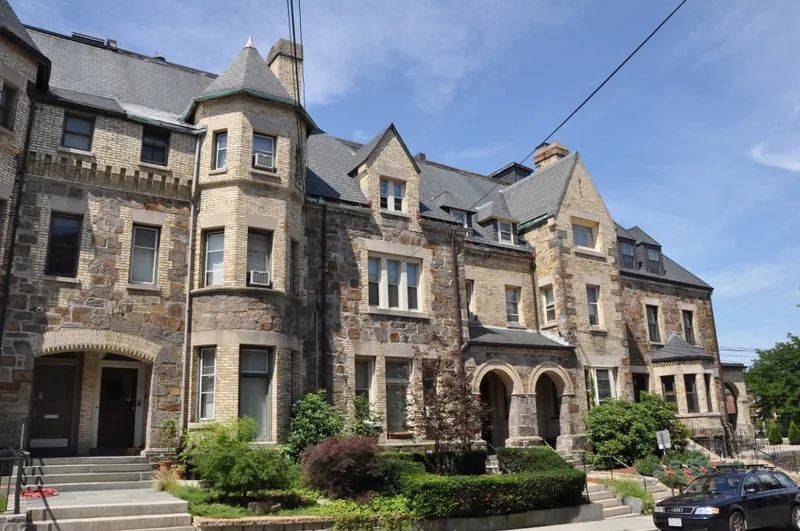
Beaconsfield Terraces is a group of attached townhouses along Tappan Street and Garrison Road in Brookline, built between 1889 and 1892. Developer Eugene Knapp, inspired by arrangements he saw in England, created households with individually owned units and shared amenities such as a six-acre park, stables, a casino, tennis courts and conservatories. The Boston firm Fehmer and Page designed the terraces in three styles: Chateauesque in yellow brick and fieldstone, a Flemish design with limestone-trimmed gables, and Georgian Revival in red brick with Palladian windows and Corinthian porticoes. Construction followed an English plan of thick walls and solid roofs, and the complex had its own boiler house supplying steam heat. It sat near the widened Beacon Street and its streetcar line, which helped sales. The district is significant as an early example of condominium-style living and for the towers and turrets that shaped nearby Beacon Street architecture. Several shared amenities and the later Hotel Beaconsfield are gone.
Machine-generated summary. This summary was generated by a language model from the official nomination document and has not been reviewed line by line by an editor. It may contain errors. Check the source document before relying on any detail. Source: nomination document (PDF) · catalog entry. Generated October 2026 (model claude-sonnet-5-5, prompt v1.0-2026-10-29).
| Period of significance | 1889-1892 |
|---|---|
| Styles | Chateauesque, Flemish, Georgian Revival |
| Areas of significance | Community Planning and Development, Architecture |
| Acreage | 6 |
| Boundary source | NPS cultural-resource GIS polygon |
| Full listing page | Beaconsfield Terraces Historic District (property record) |
What listing means for this property
This is a historic district. Buildings within its boundary are either contributing (they add to the district's significance) or non-contributing. Owners of contributing income-producing buildings can claim the 20% federal rehabilitation tax credit; homeowners should look at state credits. National Register districts impose no design review by themselves; a local historic district ordinance, if one exists, does (the difference explained).
General information, not legal or tax advice. Rules change; confirm with your State Historic Preservation Office or a qualified adviser.