Baxter Street Historic District

Why it's listed
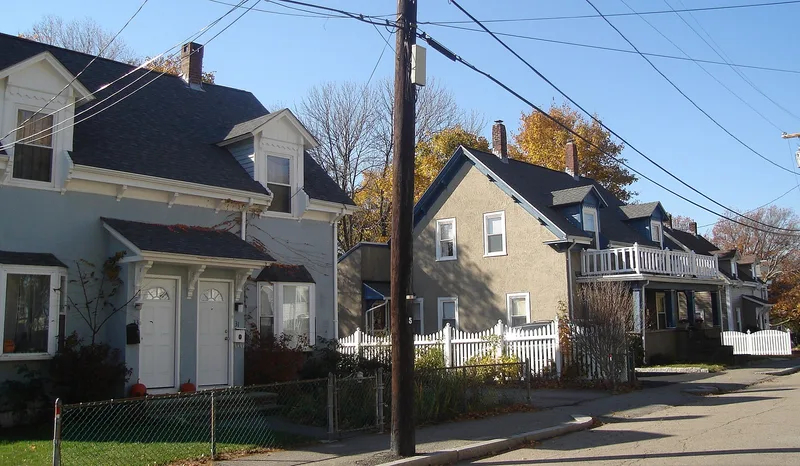
Four two-family houses on Baxter Street in Quincy, Massachusetts, form a small enclave of workers' housing from the 1880s. John E. Drake, who operated one of the city's largest shoe and boot factories and employed about 250 men in the early 1880s, built them on former Josiah Baxter farmland. His factory stood a short distance away, and the houses were probably rented to factory workers. Each is a one-and-a-half story gable-roofed 'Quincy Cottage' with a projecting central entrance and twin dormers cutting through the eave line. Details vary from house to house, including shingle or stucco sheathing, Italianate brackets, Stick Style paneling and different porches or entrance hoods. Nearby houses on adjoining lots have been altered, which makes this group the best-preserved example of the type in Quincy. The district reflects how shoemaking moved from home workshops to factories and how shoe and granite industry leaders developed housing for laborers in South and West Quincy.
Machine-generated summary. This summary was generated by a language model from the official nomination document and has not been reviewed line by line by an editor. It may contain errors. Check the source document before relying on any detail. Source: nomination document (PDF) · catalog entry. Generated October 2026 (model claude-sonnet-5-5, prompt v1.0-2026-10-29).
| Styles | Quincy Cottage (vernacular), with Italianate and Stick Style details |
|---|---|
| Areas of significance | Industry, Architecture |
| Acreage | 0.9 |
| Boundary source | NPS cultural-resource GIS polygon |
| Full listing page | Baxter Street Historic District (property record) |
What listing means for this property
This is a historic district. Buildings within its boundary are either contributing (they add to the district's significance) or non-contributing. Owners of contributing income-producing buildings can claim the 20% federal rehabilitation tax credit; homeowners should look at state credits. National Register districts impose no design review by themselves; a local historic district ordinance, if one exists, does (the difference explained).
General information, not legal or tax advice. Rules change; confirm with your State Historic Preservation Office or a qualified adviser.