Barre Common District

Why it's listed
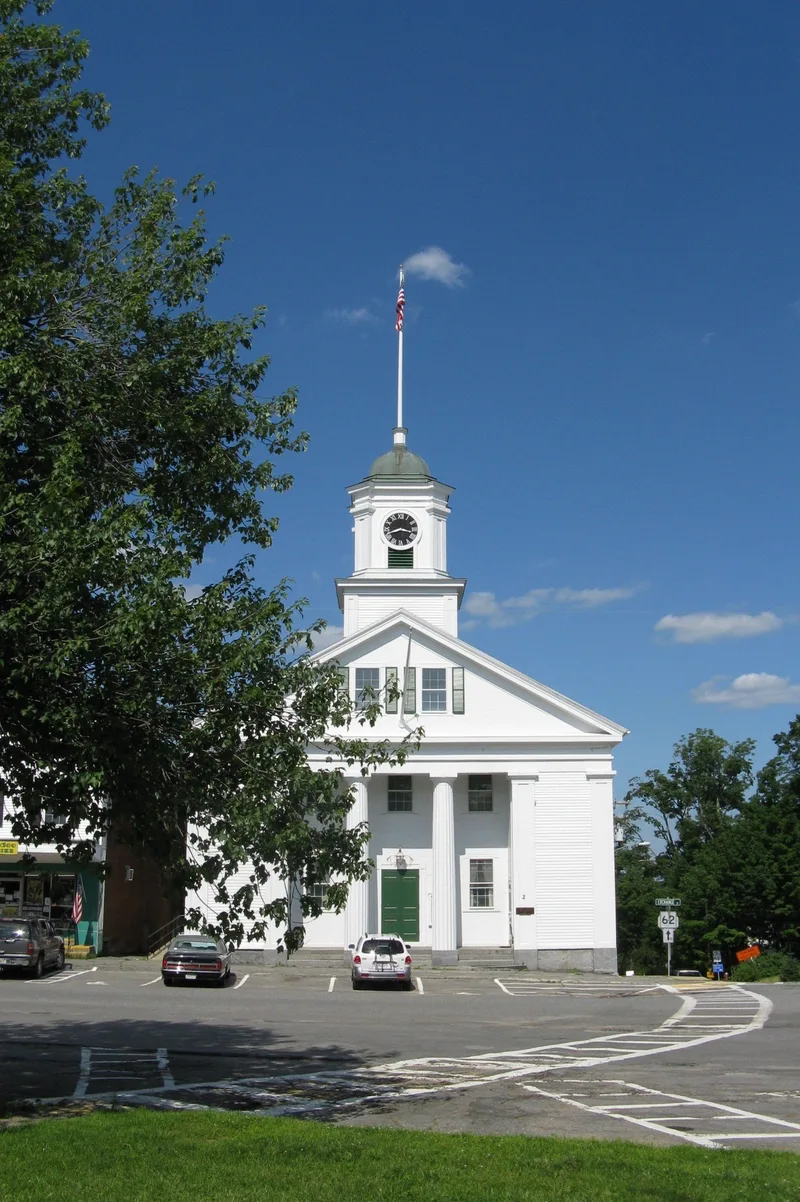
Barre Common District is the historic center of Barre, Massachusetts: thirty commercial, municipal, cultural, religious and residential buildings facing a large open common of just over 15 acres. Greek Revival architecture dominates, including the Congregational Church of 1849, the Town House of 1838-39 designed by E. Lamb, and two buildings of 1836 attributed to Elias Carter. Other styles appear too, such as a late eighteenth-century Federal house, a bracketed house of 1865, and the Richardsonian Romanesque Barre Savings Bank of 1894. Only five twentieth-century structures intrude. The Common itself has been a gathering place for militia training, a July 1840 speech by Daniel Webster, and summer band concerts that earned Barre the nickname "Band Concert Town of New England." The Town House briefly housed the Barre Normal School. Many properties trace to the Caldwell and Woods families, who gave the North Park, the church and the library.
Machine-generated summary. This summary was generated by a language model from the official nomination document and has not been reviewed line by line by an editor. It may contain errors. Check the source document before relying on any detail. Source: nomination document (PDF) · catalog entry. Generated October 2026 (model claude-sonnet-5-5, prompt v1.0-2026-10-29).
| Period of significance | 1700-1799, 1800-1899, 1900- |
|---|---|
| Styles | Greek Revival, with bracketed and Richardsonian Romanesque examples |
| Areas of significance | Architecture |
| Acreage | 22 |
| Boundary source | NPS cultural-resource GIS polygon |
| Full listing page | Barre Common District (property record) |
What listing means for this property
This is a historic district. Buildings within its boundary are either contributing (they add to the district's significance) or non-contributing. Owners of contributing income-producing buildings can claim the 20% federal rehabilitation tax credit; homeowners should look at state credits. National Register districts impose no design review by themselves; a local historic district ordinance, if one exists, does (the difference explained).
General information, not legal or tax advice. Rules change; confirm with your State Historic Preservation Office or a qualified adviser.