Barn House

Why it's listed
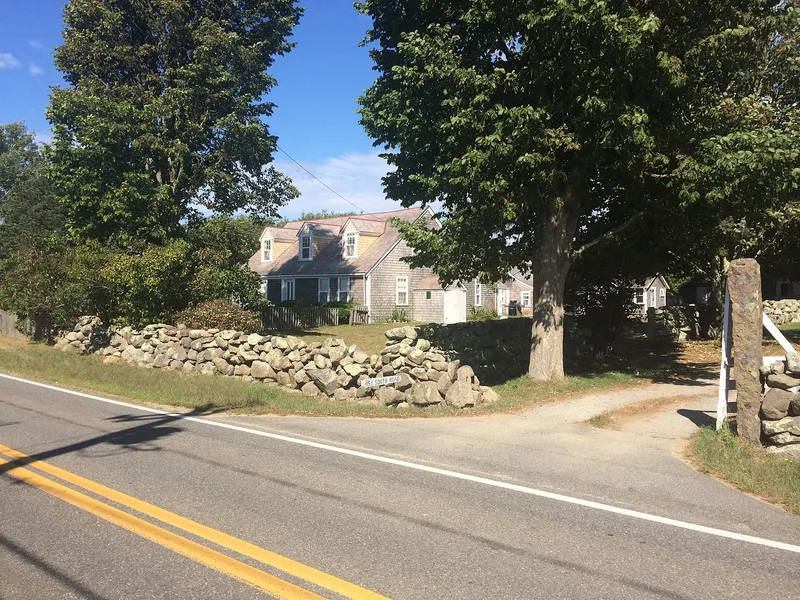
Barn House is a 43-acre property on South Road in Chilmark, on Martha's Vineyard. It holds a small shingled farmhouse from about 1690, a barn from about 1786 reportedly built with salvaged materials from the old Chilmark meetinghouse, a mid-19th-century shed, stone walls, a stone-slab culvert and a group of simple cabins. The house retains planked walls and paired summer beams, features typical of early Colonial building on the island. The barn, open fields and walls reflect generations of sheep farming, from the Skiff family in the 1690s to the Vincent family in the 1880s. In 1919 a group of writers, artists and social activists bought the farm as Chilmark Associates. They shared meals in the barn, divided the chores and built small sleeping cabins. The name Barn House was adopted in 1927. The property is significant locally for its architecture, agricultural history and its long-running communal summer community, and the use continues today.
Machine-generated summary. This summary was generated by a language model from the official nomination document and has not been reviewed line by line by an editor. It may contain errors. Check the source document before relying on any detail. Source: nomination document (PDF) · catalog entry. Generated October 2026 (model claude-sonnet-5-5, prompt v1.0-2026-10-29).
| Period of significance | ca. 1690 - 1961 |
|---|---|
| Styles | Colonial |
| Areas of significance | Agriculture, Architecture, Transportation |
| Acreage | 42.8 |
| Boundary source | NPS cultural-resource GIS polygon |
| Full listing page | Barn House (property record) |
What listing means for this property
This is a historic district. Buildings within its boundary are either contributing (they add to the district's significance) or non-contributing. Owners of contributing income-producing buildings can claim the 20% federal rehabilitation tax credit; homeowners should look at state credits. National Register districts impose no design review by themselves; a local historic district ordinance, if one exists, does (the difference explained).
General information, not legal or tax advice. Rules change; confirm with your State Historic Preservation Office or a qualified adviser.