Ballardvale District

Why it's listed
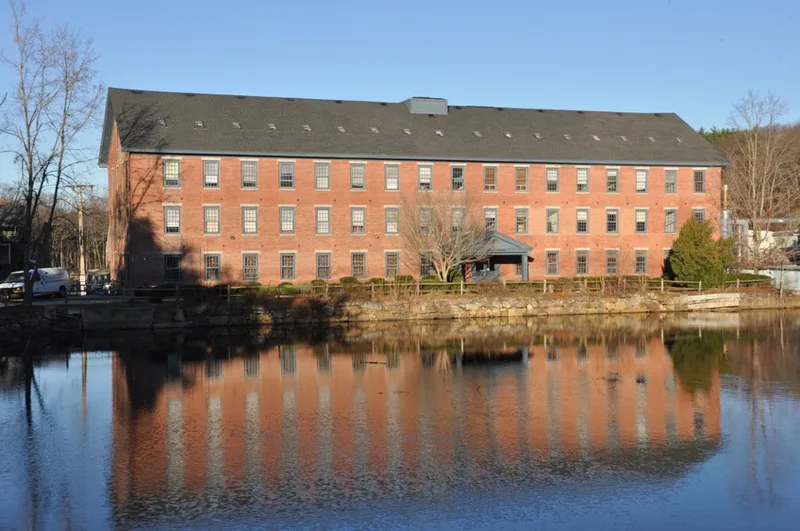
Ballardvale is a planned mill village in Andover, Massachusetts, founded in 1836 when John and William S. Marland and other investors established the Ballardvale Manufacturing Company. The village took its name from Timothy Ballard, who had run a grist and saw mill there. Its mills produced worsted goods, flannels and delaines, and later industries included locomotive building, machine-cut files, hats, art metalwork and stoneware. In 1848 Marland laid out fifty acres into house lots, and skilled Scottish, English and Irish craftsmen settled there. Many company-owned homes were later bought by their tenants. The roughly 95 properties are mostly small, simple houses in Greek Revival, Gothic and early Italianate styles, many built by Jacob Chickering. Notable survivors include the brick and wooden mill buildings, the Italianate railroad depot, the Marland-Bradlee mansion, a wrought-iron truss bridge and a Gothic chapel. The district was listed for its intact planned mill-village character, its link to local manufacturers and a leading builder, and its range of mid-Victorian architecture.
Machine-generated summary. This summary was generated by a language model from the official nomination document and has not been reviewed line by line by an editor. It may contain errors. Check the source document before relying on any detail. Source: nomination document (PDF) · catalog entry. Generated October 2026 (model claude-sonnet-5-5, prompt v1.0-2026-10-29).
| Period of significance | 1835-1935 |
|---|---|
| Styles | Greek Revival, Gothic Revival, Italianate (also Federal and Italian Villa examples) |
| Areas of significance | Industry, Community Planning and Development, Commerce, Architecture |
| Acreage | 40 |
| Boundary source | NPS cultural-resource GIS polygon |
| Full listing page | Ballardvale District (property record) |
What listing means for this property
This is a historic district. Buildings within its boundary are either contributing (they add to the district's significance) or non-contributing. Owners of contributing income-producing buildings can claim the 20% federal rehabilitation tax credit; homeowners should look at state credits. National Register districts impose no design review by themselves; a local historic district ordinance, if one exists, does (the difference explained).
General information, not legal or tax advice. Rules change; confirm with your State Historic Preservation Office or a qualified adviser.