Baldwinville Village Historic District

Why it's listed
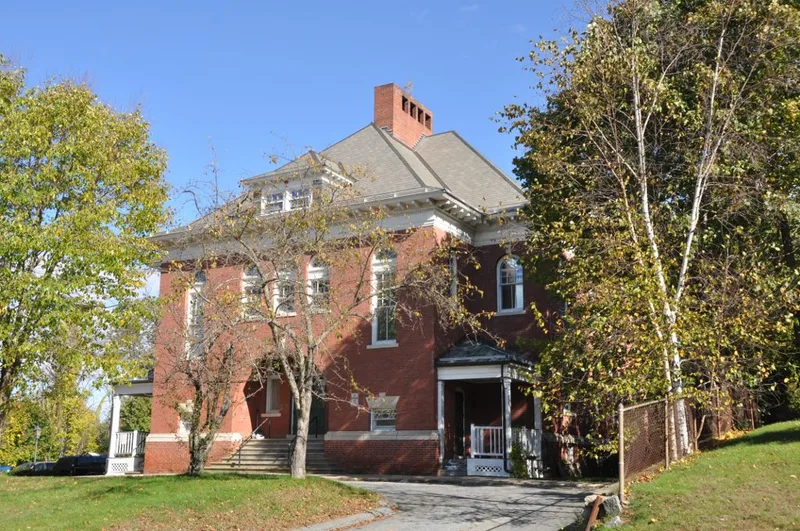
Baldwinville Village Historic District covers about 20 acres of northern Templeton, Massachusetts, around the junction of Routes 202 and 68 and across the Otter River. It holds 116 properties, mostly houses, plus three churches, a fire station, a school and a few commercial blocks. Between about 1825 and 1940 the village hosted woodworking factories, especially chairmaking, and many of the finer homes were built for factory owners and managers. The factories were lost to fire and a 1943 flood control project, but the buildings linked to the people and growth of that industry remain. Architecture ranges from Federal houses such as the 1797 Eden Baldwin House to Greek Revival cottages, a Second Empire mansard house, a brick rowhouse for workers, and Colonial Revival homes of the early 1900s. The district also preserves two cottages from Dr. L. W. Baker's 1882 Hospital Cottages for Children, an early center for epilepsy treatment.
Machine-generated summary. This summary was generated by a language model from the official nomination document and has not been reviewed line by line by an editor. It may contain errors. Check the source document before relying on any detail. Source: nomination document (PDF) · catalog entry. Generated October 2026 (model claude-sonnet-5-5, prompt v1.0-2026-10-29).
| Period of significance | 1734-1935 |
|---|---|
| Styles | Federal, Greek Revival, Gothic Revival, Second Empire, Stick Style, Queen Anne, Colonial Revival and vernacular Victorian |
| Areas of significance | Community Planning and Development, Commerce, Historic - Non-Aboriginal, Health/Medicine, Architecture, Religion, Social History |
| Acreage | 21 |
| Boundary source | NPS cultural-resource GIS polygon |
| Full listing page | Baldwinville Village Historic District (property record) |
What listing means for this property
This is a historic district. Buildings within its boundary are either contributing (they add to the district's significance) or non-contributing. Owners of contributing income-producing buildings can claim the 20% federal rehabilitation tax credit; homeowners should look at state credits. National Register districts impose no design review by themselves; a local historic district ordinance, if one exists, does (the difference explained).
General information, not legal or tax advice. Rules change; confirm with your State Historic Preservation Office or a qualified adviser.