Arlington-Basswood Historic District

Why it's listed
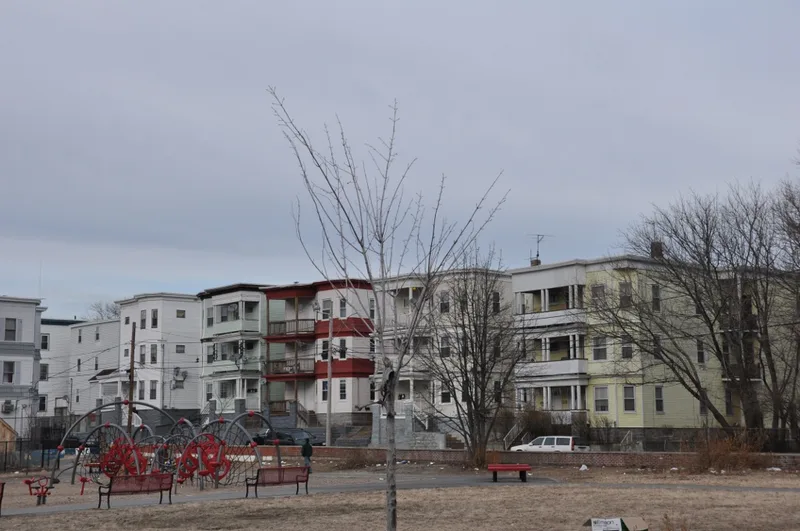
Arlington-Basswood is a compact neighborhood of about 89 properties in northeastern Lawrence, Massachusetts, covering six blocks and 10.74 acres. Nearly all of it consists of wood-frame three-decker houses built between 1909 and 1925, with a few cottages and two-family homes. Typical buildings rise three stories under flat roofs with bracketed cornices, clapboard and shingle siding, and tall front porches with Doric columns, in a Classical Revival manner. The land was once farmland, later bought by a land agent for the Arlington Mills to house workers. When the mill expanded, the parcel was auctioned in 1909 as 112 lots with graded streets and sewer connections. Close to streetcar lines and a school, it filled quickly with working-class families employed in local mills. Three-deckers are less common in Lawrence than in Fall River or Worcester, so this uniform, nearly continuous streetscape is notable. It was listed for its architectural cohesion and its record of working-class housing in a textile city.
Machine-generated summary. This summary was generated by a language model from the official nomination document and has not been reviewed line by line by an editor. It may contain errors. Check the source document before relying on any detail. Source: nomination document (PDF) · catalog entry. Generated October 2026 (model claude-sonnet-5-5, prompt v1.0-2026-10-29).
| Period of significance | 1909-1925 |
|---|---|
| Styles | Classical Revival style three-decker houses |
| Areas of significance | Community Planning and Development, Architecture |
| Acreage | 10.7 |
| Boundary source | NPS cultural-resource GIS polygon |
| Full listing page | Arlington-Basswood Historic District (property record) |
What listing means for this property
This is a historic district. Buildings within its boundary are either contributing (they add to the district's significance) or non-contributing. Owners of contributing income-producing buildings can claim the 20% federal rehabilitation tax credit; homeowners should look at state credits. National Register districts impose no design review by themselves; a local historic district ordinance, if one exists, does (the difference explained).
General information, not legal or tax advice. Rules change; confirm with your State Historic Preservation Office or a qualified adviser.