Andover Village Industrial District

Why it's listed
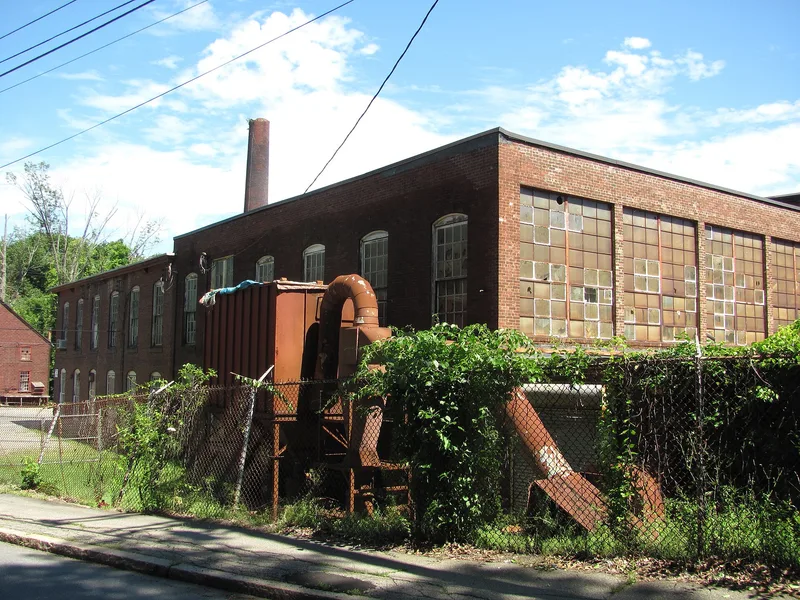
Along the Shawsheen River in the center of Andover, Massachusetts, a cluster of mills and workers' housing forms the area long called "The Village." The district covers about 85 acres and 92 properties built between 1814 and 1925. It has three groups: the Marland Mills, Abbot Village and the Tyer Rubber Company. The Marland complex includes a Greek Revival woolen mill from about 1820-30, an 1883 spinning and carding mill with a bell tower, and a saw-toothed-roof weaving mill of 1925. Abbot Village holds the 1814 Abbot Mill, the earliest surviving industrial building, and the Smith & Dove linen mills. The rubber company's four-story brick factory dates from 1912. Nearby are brick duplexes, wooden tenement rows, boarding houses and a stone arch bridge from about 1820. The district reflects how population gathered around water power sites and how textile and rubber manufacturing drove Andover's growth. Few intrusions disturb its historic character.
Machine-generated summary. This summary was generated by a language model from the official nomination document and has not been reviewed line by line by an editor. It may contain errors. Check the source document before relying on any detail. Source: nomination document (PDF) · catalog entry. Generated October 2026 (model claude-sonnet-5-5, prompt v1.0-2026-10-29).
| Period of significance | 1814-1925 |
|---|---|
| Styles | Greek Revival through early 20th century standard factory construction |
| Areas of significance | Industry, Architecture |
| Acreage | 85 |
| Boundary source | NPS cultural-resource GIS polygon |
| Full listing page | Andover Village Industrial District (property record) |
What listing means for this property
This is a historic district. Buildings within its boundary are either contributing (they add to the district's significance) or non-contributing. Owners of contributing income-producing buildings can claim the 20% federal rehabilitation tax credit; homeowners should look at state credits. National Register districts impose no design review by themselves; a local historic district ordinance, if one exists, does (the difference explained).
General information, not legal or tax advice. Rules change; confirm with your State Historic Preservation Office or a qualified adviser.