Andover Street Historic District

Why it's listed
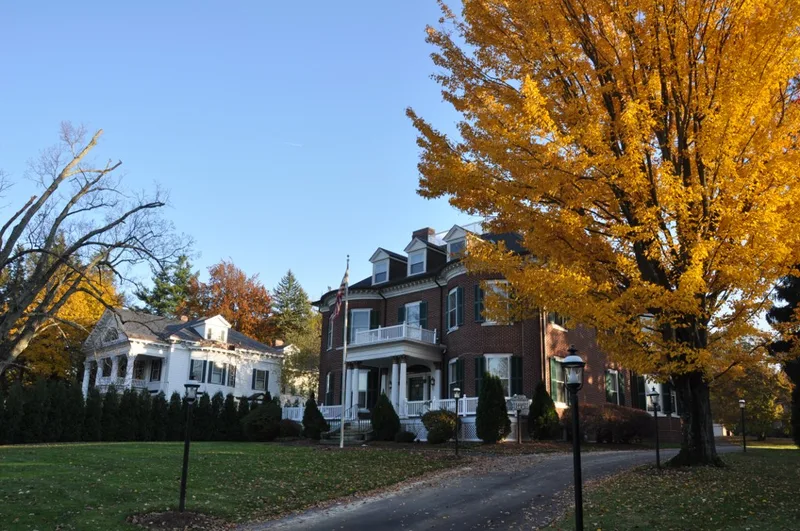
Andover Street in Lowell's Belvidere section is lined on both sides with large houses over a stretch of about 1.1 miles. The district covers roughly 70.6 acres and holds 165 resources, of which 139 contribute to its character. The earliest surviving house, a Federal farmhouse, dates from 1802, when the area was woodlot and farmland. Development then came in three phases. Italianate and Queen Anne homes were built from the 1860s to the 1890s. Large Colonial Revival houses followed around the turn of the century. Smaller Colonial Revival and Bungalow-influenced houses went up in the 1920s and 1930s. Landscape features include tree-lined edges, manicured lawns, iron fences and stone walls. Lowell architect Frederick W. Stickney and Chelmsford architect Edwin R. Clark designed a few of the houses, while local contractors built most of the rest, often from pattern books. The loss of two grand estates and some newer infill detract somewhat, but the street keeps the look of a broad avenue of stately homes.
Machine-generated summary. This summary was generated by a language model from the official nomination document and has not been reviewed line by line by an editor. It may contain errors. Check the source document before relying on any detail. Source: nomination document (PDF) · catalog entry. Generated October 2026 (model claude-sonnet-5-5, prompt v1.0-2026-10-29).
| Styles | Federal, Gothic Revival, Italianate, Second Empire, Queen Anne, Colonial Revival, Bungalow |
|---|---|
| Areas of significance | Architecture, Agriculture, Community Planning and Development |
| Acreage | 70.6 |
| Boundary source | NPS cultural-resource GIS polygon |
| Full listing page | Andover Street Historic District (property record) |
What listing means for this property
This is a historic district. Buildings within its boundary are either contributing (they add to the district's significance) or non-contributing. Owners of contributing income-producing buildings can claim the 20% federal rehabilitation tax credit; homeowners should look at state credits. National Register districts impose no design review by themselves; a local historic district ordinance, if one exists, does (the difference explained).
General information, not legal or tax advice. Rules change; confirm with your State Historic Preservation Office or a qualified adviser.