Amherst Central Business District

Why it's listed
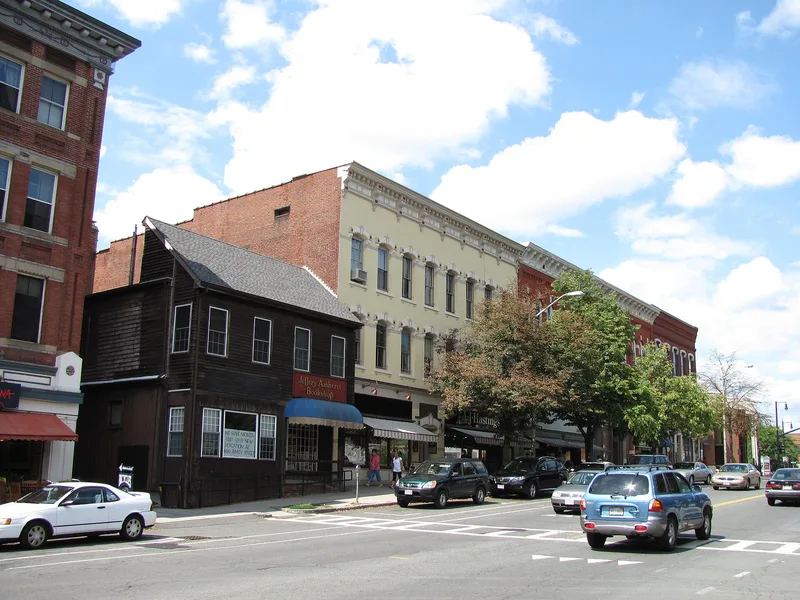
Amherst's downtown core surrounds the Amherst Common and spreads along Main, North Pleasant, South Pleasant, Boltwood and Amity streets. Most of its two- and three-story attached brick commercial blocks date from about 1836 to 1930. Repeated fires between 1838 and 1881 destroyed the early frame hotels and shops, and brick and stone became the preferred materials. Merchant's Row on South Pleasant Street and Phoenix Row on Main Street face the Common, and most of the large blocks were built after the 1881 fire. Landmarks include the Richardsonian Romanesque Town Hall of 1889-1890, Grace Episcopal Church of 1866, the former Baptist Church of 1836, and the 1744 Strong House, which was listed separately in 1984. The area has served as the town's religious, civic and commercial center for more than 150 years. Businesses grew with the arrival of the railroad in 1853 and the expansion of the colleges. Their trades, such as bookshops and clothiers, often continue today.
Machine-generated summary. This summary was generated by a language model from the official nomination document and has not been reviewed line by line by an editor. It may contain errors. Check the source document before relying on any detail. Source: nomination document (PDF) · catalog entry. Generated October 2026 (model claude-sonnet-5-5, prompt v1.0-2026-10-29).
| Styles | Federal, Victorian Eclectic, Georgian Revival, Colonial Revival, Richardsonian Romanesque |
|---|---|
| Areas of significance | Community Planning and Development, Commerce, Architecture |
| Acreage | 9 |
| Boundary source | NPS cultural-resource GIS polygon |
| Full listing page | Amherst Central Business District (property record) |
What listing means for this property
This is a historic district. Buildings within its boundary are either contributing (they add to the district's significance) or non-contributing. Owners of contributing income-producing buildings can claim the 20% federal rehabilitation tax credit; homeowners should look at state credits. National Register districts impose no design review by themselves; a local historic district ordinance, if one exists, does (the difference explained).
General information, not legal or tax advice. Rules change; confirm with your State Historic Preservation Office or a qualified adviser.