American Waltham Watch Company Historic District

Why it's listed
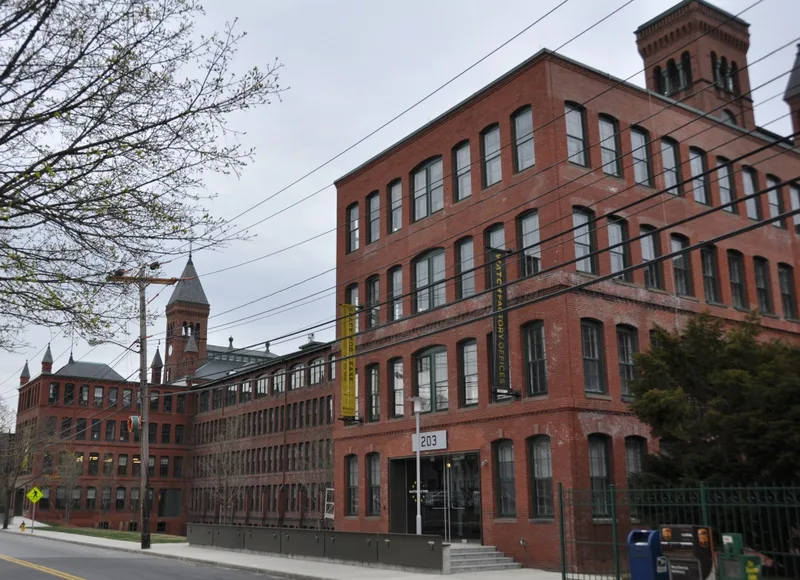
This five-story brick factory complex on Crescent Street in Waltham grew from the late 1870s to the 1910s along the Charles River. It occupies the site where the Boston Watch Company began in 1854, a firm described as the first in the world to make a complete watch under one roof. Later known as the American Waltham Watch Company, it earned an international reputation and was called the "Model Factory" for its fireproof construction, well-lit narrow wings, recreation rooms, first aid and child day care. Its buttressed, towered and pinnacled sections combine Queen Anne and Romanesque Revival details. The company also trained skilled workers who moved to rivals such as Elgin in Illinois, dominated local employment and politics, and helped shape the South Side through housing development. The complex remains largely unchanged since 1913 and now houses about 30 small businesses and manufacturers.
Machine-generated summary. This summary was generated by a language model from the official nomination document and has not been reviewed line by line by an editor. It may contain errors. Check the source document before relying on any detail. Source: nomination document (PDF) · catalog entry. Generated October 2026 (model claude-sonnet-5-5, prompt v1.0-2026-10-29).
| Styles | Queen Anne / Romanesque Revival |
|---|---|
| Areas of significance | Industry, Architecture |
| Acreage | 8.2 |
| Boundary source | NPS cultural-resource GIS polygon |
| Full listing page | American Waltham Watch Company Historic District (property record) |
What listing means for this property
This is a historic district. Buildings within its boundary are either contributing (they add to the district's significance) or non-contributing. Owners of contributing income-producing buildings can claim the 20% federal rehabilitation tax credit; homeowners should look at state credits. National Register districts impose no design review by themselves; a local historic district ordinance, if one exists, does (the difference explained).
General information, not legal or tax advice. Rules change; confirm with your State Historic Preservation Office or a qualified adviser.