Alvah Stone Mill

Why it's listed
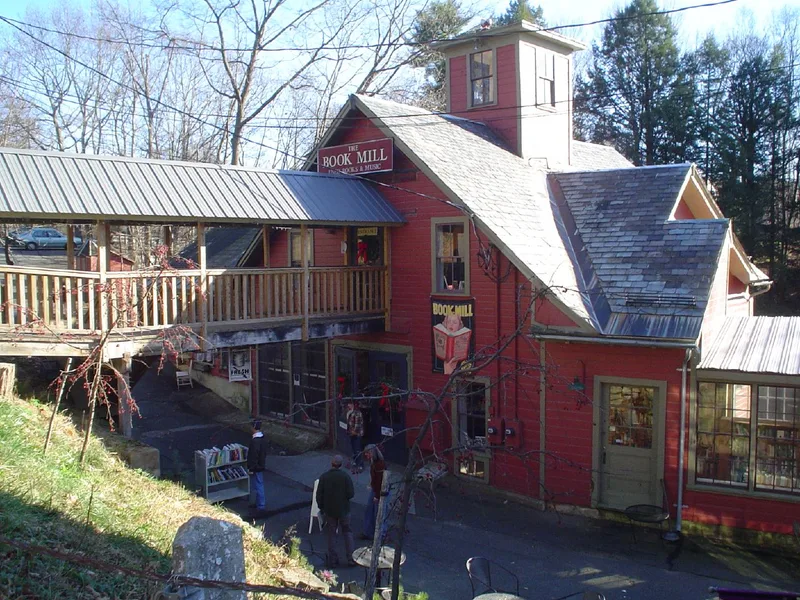
This mill complex sits at a natural drop in the Sawmill River at the center of Montague Center, Massachusetts. The main building began as an 18th century corn mill, possibly gaining fulling, carding and sawmill functions in the early 1800s. It was rebuilt in 1834 as a grist mill with a post and beam frame, keeping some earlier rubble stone foundations that now enclose the power house. In 1934 two wings were added, the water wheel was replaced by turbines and a generator, and the building was converted to making hydraulic marking machines. Since the 1980s it has housed a bookstore, cafe and performance space. The district also includes a c. 1890 tool crib, a c. 1934 die cutting shop, two 1880-90 fire hydrant sheds, and a timber frame dam rebuilt in 1901 and 1936. The dam is now breached. Together these resources show the long, changing use of a water-powered site tied to the town's settlement.
Machine-generated summary. This summary was generated by a language model from the official nomination document and has not been reviewed line by line by an editor. It may contain errors. Check the source document before relying on any detail. Source: nomination document (PDF) · catalog entry. Generated October 2026 (model claude-sonnet-5-5, prompt v1.0-2026-10-29).
| Styles | Mid-19th Century: Greek Revival |
|---|---|
| Areas of significance | Industry, Engineering, Commerce, Architecture |
| Acreage | 6.2 |
| Boundary source | NPS cultural-resource GIS polygon |
| Full listing page | Alvah Stone Mill (property record) |
What listing means for this property
This is a historic district. Buildings within its boundary are either contributing (they add to the district's significance) or non-contributing. Owners of contributing income-producing buildings can claim the 20% federal rehabilitation tax credit; homeowners should look at state credits. National Register districts impose no design review by themselves; a local historic district ordinance, if one exists, does (the difference explained).
General information, not legal or tax advice. Rules change; confirm with your State Historic Preservation Office or a qualified adviser.