Academy Historic District

Why it's listed
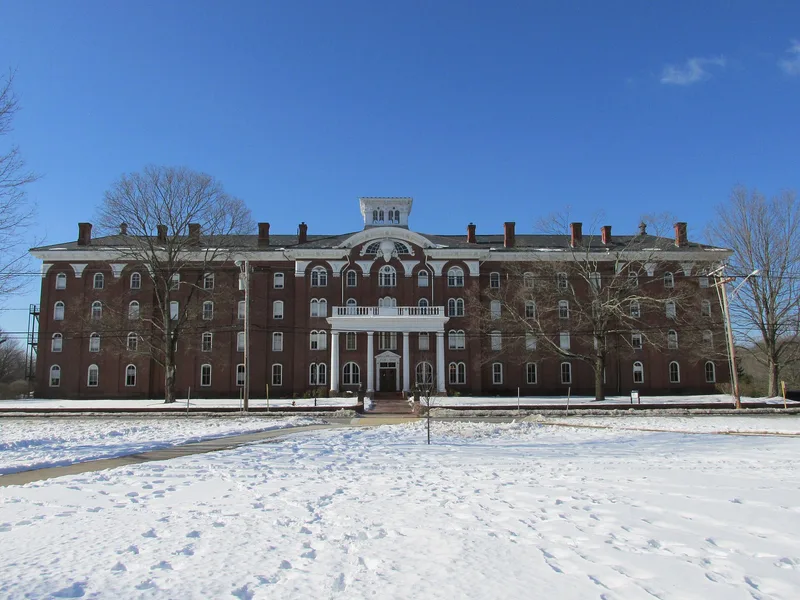
At the center of Wilbraham, Massachusetts, this 65-acre district gathers thirty buildings around the campus of Wilbraham & Monson Academy, along Main Street, Faculty Street and Mountain Road. The oldest is the 1793 Old Meeting House, believed to be the oldest surviving Methodist meetinghouse in New England. Wesleyan Academy, founded in 1817, moved to Wilbraham in 1824 with local Methodist support and became an early co-educational school. Its original brick buildings include Old Academy (1825), Fisk Hall (1851) and Binney Hall (1854), joined by the large Rich Hall of 1860-61 and the Gothic Revival Alumni Memorial Chapel. Many nearby houses were built by Academy teachers and preachers. Styles run from Federal and Greek Revival to Romanesque Revival and modern work, showing how a small New England town grew through religion, education and architecture. Notable people connected with the school include Lucy Stone and Charles Pratt.
Machine-generated summary. This summary was generated by a language model from the official nomination document and has not been reviewed line by line by an editor. It may contain errors. Check the source document before relying on any detail. Source: nomination document (PDF) · catalog entry. Generated October 2026 (model claude-sonnet-5-5, prompt v1.0-2026-10-29).
| Styles | Mixed: Federal, Greek Revival, Italianate, Gothic Revival, Romanesque Revival, Colonial Revival and contemporary |
|---|---|
| Areas of significance | Education, Architecture |
| Acreage | 65 |
| Boundary source | NPS cultural-resource GIS polygon |
| Full listing page | Academy Historic District (property record) |
What listing means for this property
This is a historic district. Buildings within its boundary are either contributing (they add to the district's significance) or non-contributing. Owners of contributing income-producing buildings can claim the 20% federal rehabilitation tax credit; homeowners should look at state credits. National Register districts impose no design review by themselves; a local historic district ordinance, if one exists, does (the difference explained).
General information, not legal or tax advice. Rules change; confirm with your State Historic Preservation Office or a qualified adviser.