White Place Historic District

Why it's listed
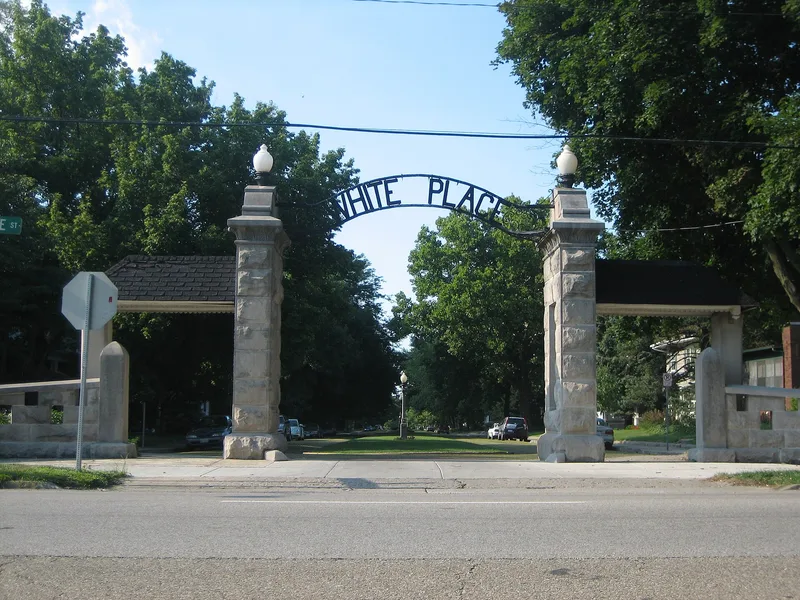
White Place Historic District is a residential neighborhood of seven whole blocks and one half block in northeast Bloomington, Illinois. It holds 146 houses and 127 garages, plus a steam heating plant, a limestone entryway at the south end of White Place, a fountain now used as a planter, and Fell Avenue Park. The park was purchased by the city in 1923 and was Bloomington's first municipal playground. Houses sit on uniform lots about 50 feet wide, set back 15 feet from the sidewalk, and most are two-story balloon-frame buildings. Prairie, Craftsman and Colonial Revival influences are common. Most were apparently built from mail-order or stock plans, though architect A.L. Pillsbury designed or modified several. One house, at 1410 Clinton Boulevard, was traced to a 1920 plan book. White Place keeps its brick paving, and all three main streets retain limestone curbing. Only 11 buildings have been added since World War II, so the area retains the look of a neighborhood from more than 80 years ago.
Machine-generated summary. This summary was generated by a language model from the official nomination document and has not been reviewed line by line by an editor. It may contain errors. Check the source document before relying on any detail. Source: nomination document (PDF) · catalog entry. Generated October 2026 (model claude-sonnet-5-5, prompt v1.0-2026-10-29).
| Styles | Prairie influence, Craftsman influence and Colonial Revival influence (vernacular houses with some high-style details) |
|---|---|
| Areas of significance | Community Planning and Development, Architecture |
| Acreage | 38.8 |
| Boundary source | NPS cultural-resource GIS polygon |
| Full listing page | White Place Historic District (property record) |
What listing means for this property
This is a historic district. Buildings within its boundary are either contributing (they add to the district's significance) or non-contributing. Owners of contributing income-producing buildings can claim the 20% federal rehabilitation tax credit; homeowners should look at state credits. National Register districts impose no design review by themselves; a local historic district ordinance, if one exists, does (the difference explained).
General information, not legal or tax advice. Rules change; confirm with your State Historic Preservation Office or a qualified adviser.