West Walnut Street Historic District

Why it's listed
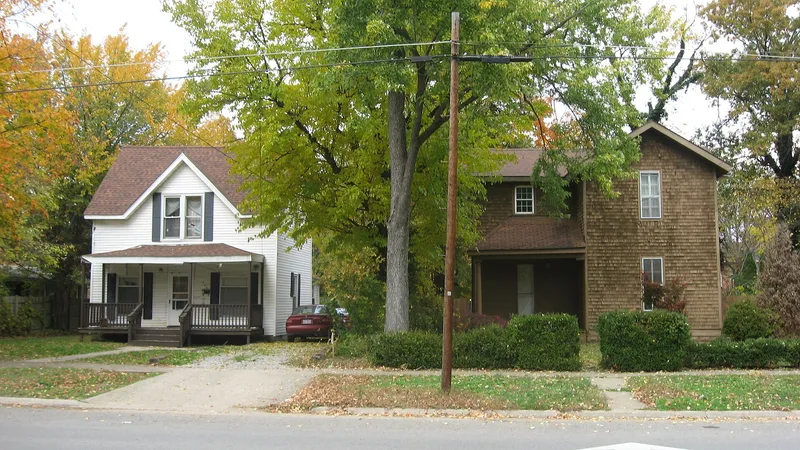
This 18-acre neighborhood in Carbondale, Illinois, gathers 54 houses along West Walnut Street and nearby stretches of Main, Maple, Poplar and Springer Streets, with 48 dating from 1859 to 1929. Laid out in the 1850s from an oak grove, the area saw little building until the 1870s, and many original oaks remain. In the 19th century Walnut and Main were considered the city's most prestigious residential streets. The district holds the city's only surviving pioneer style house, built in 1859 for William Dixon, and its only mansard-roofed house, enlarged by Robert Allyn, first president of Southern Illinois Normal University. It also includes square Italianate houses, Queen Anne frame houses, the city's finest Colonial Revival house, built in 1900 for historian George Washington Smith, and substantial early 20th century brick homes. The nomination presents it as the only major residential area in Carbondale that keeps its turn-of-the-century character.
Machine-generated summary. This summary was generated by a language model from the official nomination document and has not been reviewed line by line by an editor. It may contain errors. Check the source document before relying on any detail. Source: nomination document (PDF) · catalog entry. Generated October 2026 (model claude-sonnet-5-5, prompt v1.0-2026-10-29).
| Styles | Pioneer style, bracketed Italianate, Mansard, Queen Anne, Colonial Revival, and early 20th century brick residences |
|---|---|
| Areas of significance | Architecture, Social History |
| Acreage | 18 |
| Boundary source | NPS cultural-resource GIS polygon |
| Full listing page | West Walnut Street Historic District (property record) |
What listing means for this property
This is a historic district. Buildings within its boundary are either contributing (they add to the district's significance) or non-contributing. Owners of contributing income-producing buildings can claim the 20% federal rehabilitation tax credit; homeowners should look at state credits. National Register districts impose no design review by themselves; a local historic district ordinance, if one exists, does (the difference explained).
General information, not legal or tax advice. Rules change; confirm with your State Historic Preservation Office or a qualified adviser.