West Park Neighborhood Historic District

Why it's listed
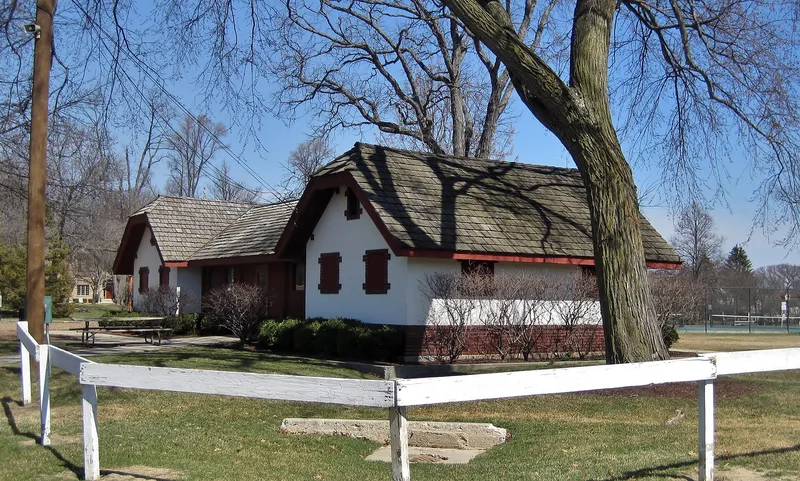
West Park Neighborhood Historic District occupies a stretch of east central Lake Forest, Illinois, on three sides of West Park, just east of Green Bay Road. It combines the northern part of the 1887 Holt Subdivision with the 1907 Green Bay Road Addition, also called the Young Men's Club Addition, planned by architect Howard Van Doren Shaw. The park, its informal landscape and an Arts & Crafts clubhouse by Irving H. Pond date from 1922. Lots are narrow, about fifty feet wide, and most houses are two-story or story-and-a-half homes with rear garages, built mainly before 1930. Styles include American Foursquare, Colonial Revival, Craftsman bungalow, Tudor Revival and vernacular forms, many from local builders such as the Griffis family and architects Stanley D. Anderson and Jerome Cerny. The land was once part of an 1837 farm, and parts of the old farm lane survive in the street pattern. The district counts 190 contributing and 49 noncontributing resources.
Machine-generated summary. This summary was generated by a language model from the official nomination document and has not been reviewed line by line by an editor. It may contain errors. Check the source document before relying on any detail. Source: nomination document (PDF) · catalog entry. Generated October 2026 (model claude-sonnet-5-5, prompt v1.0-2026-10-29).
| Styles | Late 19th and 20th Century Revivals; Late 19th and 20th Century Movements (American Foursquare, Colonial Revival, Arts & Crafts, Tudor Revival, bungalow, vernacular) |
|---|---|
| Areas of significance | Architecture, Community Planning and Development |
| Acreage | 25 |
| Boundary source | NPS cultural-resource GIS polygon |
| Full listing page | West Park Neighborhood Historic District (property record) |
What listing means for this property
This is a historic district. Buildings within its boundary are either contributing (they add to the district's significance) or non-contributing. Owners of contributing income-producing buildings can claim the 20% federal rehabilitation tax credit; homeowners should look at state credits. National Register districts impose no design review by themselves; a local historic district ordinance, if one exists, does (the difference explained).
General information, not legal or tax advice. Rules change; confirm with your State Historic Preservation Office or a qualified adviser.