West End Historic District

Why it's listed
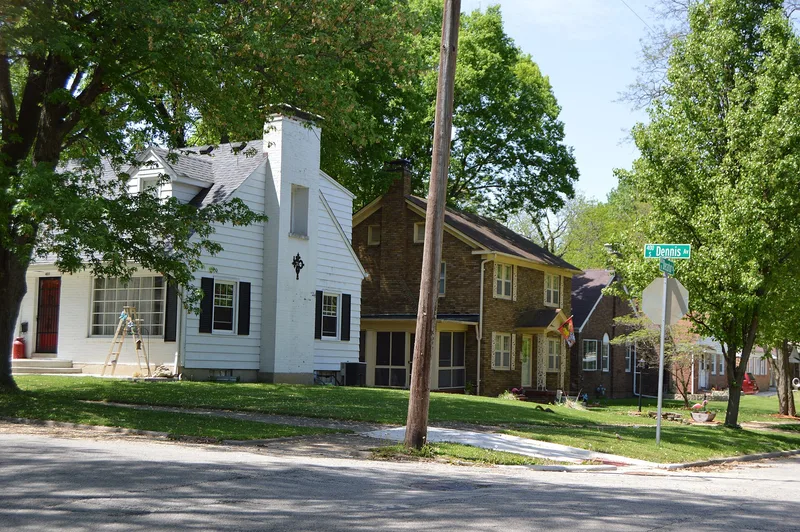
West of downtown Decatur, Illinois, this residential district spans gently rolling streets between Fairview Park on the north and Kiwanis Park on the south. It holds 1,707 contributing buildings and outbuildings plus 73 brick and river-cobble street piers, most built between about 1900 and 1952. Period revival styles dominate, followed by Craftsman and Bungalow houses, with Queen Anne, Prairie, Colonial Revival, English Revival and International examples also present. Only a school, the Late Gothic Revival Westminster Presbyterian Church and one small commercial building break the residential character. Montgomery Place, with its curving streets and large lots, was among Decatur's first such subdivisions. Brick and concrete streets, curbs, sidewalks and mature trees add to the setting. The district was listed because it shows how automobile-era growth and planned suburban development carried the industrial city westward, offering newer housing to its expanding middle and upper classes, many connected with local manufacturing.
Machine-generated summary. This summary was generated by a language model from the official nomination document and has not been reviewed line by line by an editor. It may contain errors. Check the source document before relying on any detail. Source: nomination document (PDF) · catalog entry. Generated October 2026 (model claude-sonnet-5-5, prompt v1.0-2026-10-29).
| Styles | Late 19th & 20th Century Revivals; Late 19th & Early 20th Century American Movements; Modern Movement |
|---|---|
| Areas of significance | Architecture, Community Planning and Development |
| Acreage | 318 |
| Boundary source | NPS cultural-resource GIS polygon |
| Full listing page | West End Historic District (property record) |
What listing means for this property
This is a historic district. Buildings within its boundary are either contributing (they add to the district's significance) or non-contributing. Owners of contributing income-producing buildings can claim the 20% federal rehabilitation tax credit; homeowners should look at state credits. National Register districts impose no design review by themselves; a local historic district ordinance, if one exists, does (the difference explained).
General information, not legal or tax advice. Rules change; confirm with your State Historic Preservation Office or a qualified adviser.