West Downtown Rockford Historic District

Why it's listed
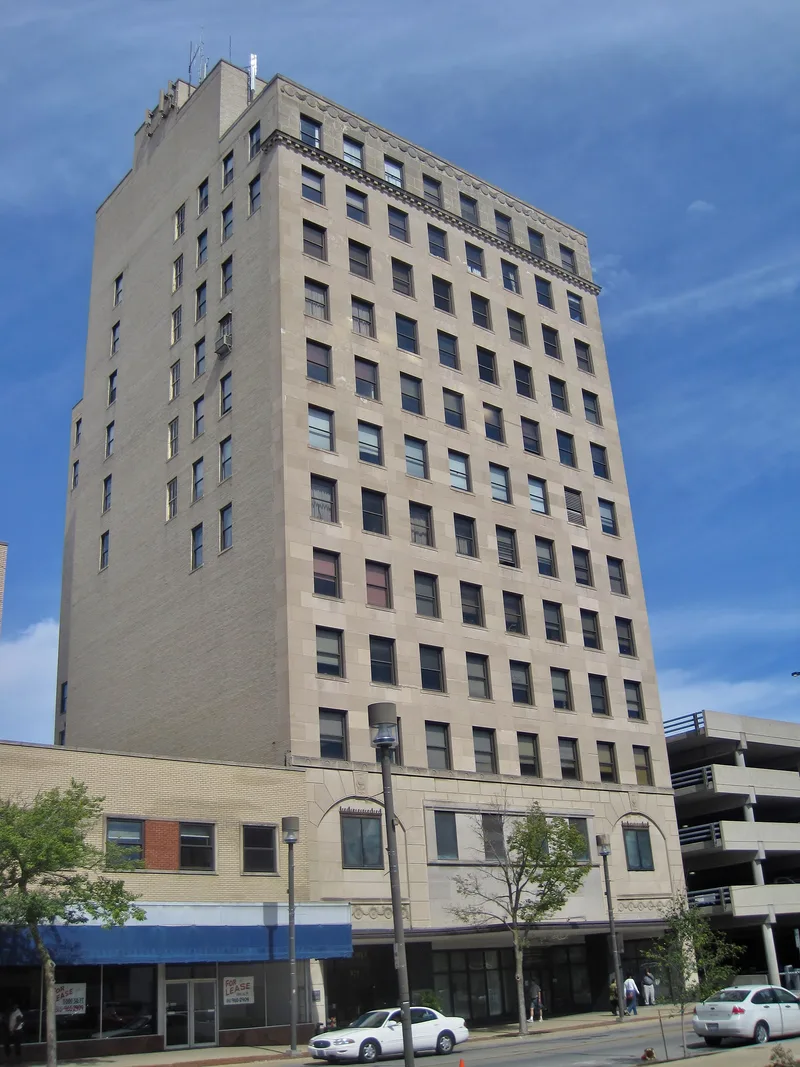
Rockford's west downtown is a compact business district along the west bank of the Rock River, centered on the intersection of State and Main streets. It holds 44 masonry structures, 41 of them historically contributing, ranging from one to twelve stories. Most are one- or two-part commercial blocks, joined by taller vertical blocks, office buildings, two theaters, hotels and a club house. Construction dates run from the 1856 Chick Hotel to 1985, but the 1920s dominate, when about 25 buildings went up and many older homes were replaced by commercial blocks. Eight are Art Deco, and the Coronado Theater shows Spanish Colonial Revival design. The district became the city's retail center by 1900, then declined after World War II as shopping and development moved outward. Most alterations are to storefronts, with upper floors largely intact. The buildings together show the growth of a regionally important city's commercial heart, with particular strength in 1920s design and construction.
Machine-generated summary. This summary was generated by a language model from the official nomination document and has not been reviewed line by line by an editor. It may contain errors. Check the source document before relying on any detail. Source: nomination document (PDF) · catalog entry. Generated October 2026 (model claude-sonnet-5-5, prompt v1.0-2026-10-29).
| Styles | Late Victorian (Italianate, Romanesque), Classical Revival, Beaux Arts, Spanish Colonial Revival, Commercial Style, Art Deco, Moderne |
|---|---|
| Areas of significance | Commerce, Architecture |
| Acreage | 16 |
| Boundary source | NPS cultural-resource GIS polygon |
| Full listing page | West Downtown Rockford Historic District (property record) |
What listing means for this property
This is a historic district. Buildings within its boundary are either contributing (they add to the district's significance) or non-contributing. Owners of contributing income-producing buildings can claim the 20% federal rehabilitation tax credit; homeowners should look at state credits. National Register districts impose no design review by themselves; a local historic district ordinance, if one exists, does (the difference explained).
General information, not legal or tax advice. Rules change; confirm with your State Historic Preservation Office or a qualified adviser.