West Argyle Street Historic District (Boundary Increase)

The National Park Service has not published a boundary polygon for this district; the map shows the listed properties inside it and the district's reference point.
Why it's listed
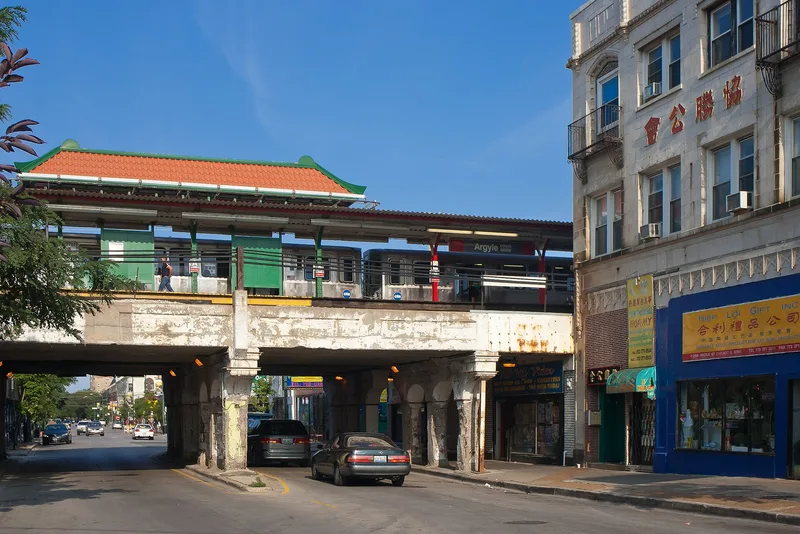
Roughly six miles north of the Loop in Chicago's Uptown neighborhood, this district clusters around the Argyle elevated train station. It holds seventy-three buildings, mostly brick with limestone and terra cotta detailing, ranging from one to twelve stories. Contributing buildings date from 1898 to 1938 and include flat buildings, single-family houses, courtyard apartments, apartment hotels and one- and two-part commercial blocks along West Argyle Street. Styles include Classical, Renaissance, Spanish Eclectic, Tudor and Late Gothic revivals, plus an Art Deco commercial building on North Sheridan Road. The tallest is the twelve-story 5050 Sheridan Building of 1929. Growth followed the extension of the elevated railway to Wilson Avenue after residents lobbied for it, which drew new residents and merchants. The boundaries enclose the most intact remaining portion of this development, since later redevelopment removed parts of the Winthrop-Kenmore corridor. Alterations are mostly to storefronts and windows, and the district keeps its historic scale, materials and street pattern.
Machine-generated summary. This summary was generated by a language model from the official nomination document and has not been reviewed line by line by an editor. It may contain errors. Check the source document before relying on any detail. Source: nomination document (PDF). Generated October 2026 (model claude-sonnet-5-5, prompt v1.0-2026-10-29).
| Styles | Early 20th Century Revival styles (Classical, Renaissance, Spanish Eclectic, Tudor, Late Gothic); Modern Movement: Art Deco |
|---|---|
| Areas of significance | Architecture, Community Planning and Development |
| Acreage | 1 |
| Boundary source | not published |
| Full listing page | West Argyle Street Historic District (Boundary Increase) (property record) |
What listing means for this property
This is a historic district. Buildings within its boundary are either contributing (they add to the district's significance) or non-contributing. Owners of contributing income-producing buildings can claim the 20% federal rehabilitation tax credit; homeowners should look at state credits. National Register districts impose no design review by themselves; a local historic district ordinance, if one exists, does (the difference explained).
General information, not legal or tax advice. Rules change; confirm with your State Historic Preservation Office or a qualified adviser.