Waterloo Historic District

Why it's listed
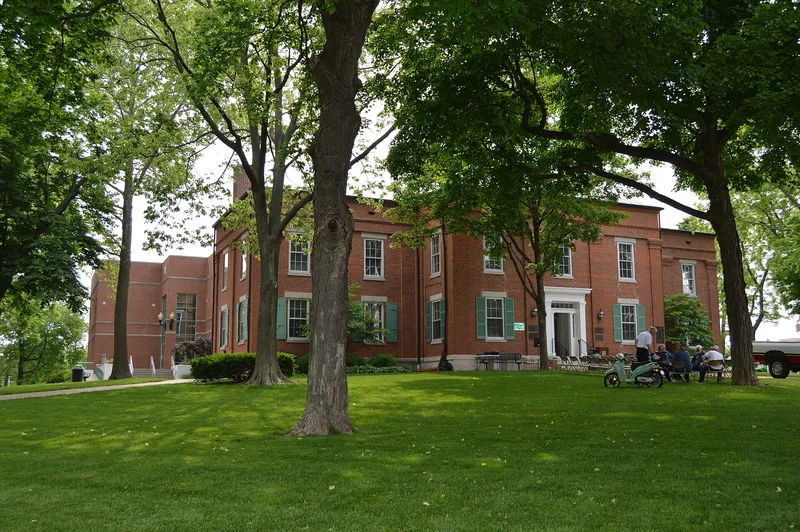
Waterloo's historic district takes in most of the central part of the Monroe County seat, south of St. Louis, Illinois. It contains 271 structures arranged around a courthouse square, where commercial activity concentrated along the west side of Main Street while the other sides developed as housing. Sixteen buildings form a continuous wall on that side of Main, and only two date from the 20th century. Architecturally the district mixes long-lived Federal elements with Greek Revival, Italianate and Second Empire touches. Its most distinctive feature is the "German Street House," a small, usually brick cottage type built from before 1852 to at least 1901. These cottages recall the German immigrants who drove the town's growth after about 1840. The town was laid out in 1818 by George Forquer and Daniel Pope Cook and became the county seat in 1825. The nomination warns that aluminum siding, poor remodeling and suburban pressure from St. Louis threaten its integrity.
Machine-generated summary. This summary was generated by a language model from the official nomination document and has not been reviewed line by line by an editor. It may contain errors. Check the source document before relying on any detail. Source: nomination document (PDF) · catalog entry. Generated October 2026 (model claude-sonnet-5-5, prompt v1.0-2026-10-29).
| Period of significance | 1800-1899 |
|---|---|
| Styles | Federal, Greek Revival, Italianate and Second Empire elements, with the local "German Street House" cottage type |
| Areas of significance | Architecture |
| Acreage | 77 |
| Boundary source | NPS cultural-resource GIS polygon |
| Full listing page | Waterloo Historic District (property record) |
What listing means for this property
This is a historic district. Buildings within its boundary are either contributing (they add to the district's significance) or non-contributing. Owners of contributing income-producing buildings can claim the 20% federal rehabilitation tax credit; homeowners should look at state credits. National Register districts impose no design review by themselves; a local historic district ordinance, if one exists, does (the difference explained).
General information, not legal or tax advice. Rules change; confirm with your State Historic Preservation Office or a qualified adviser.