Vine-Oakwood-Green Bay Road Historic District

Why it's listed
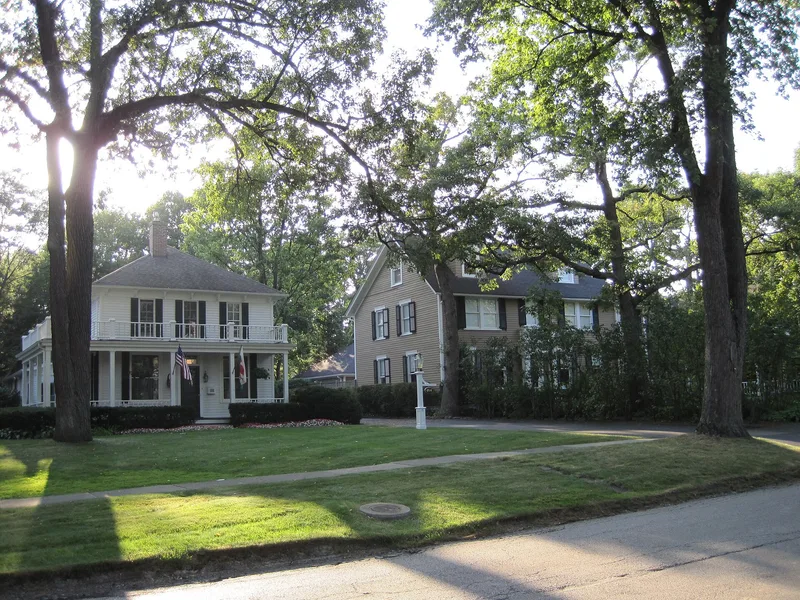
Twenty modest houses on East Vine Avenue, North Oakwood Avenue and North Green Bay Road make up this Lake Forest neighborhood, laid out on a simple grid west of the railroad tracks. Homes date from the 1860s to 1926 and show a progression from Italianate to Queen Anne, early modern stucco, and classical and medieval revival styles. Most are two stories, set back about twenty-five feet on half-acre lots, along narrow streets with grassy parkways, large trees and gas streetlamps. Notable works include a Medieval Revival house by Hugh Garden and the 1913 Clow House by David Adler, an early product of the Adler-Dangler partnership. The district matters because Lake Forest is otherwise known for large estates and curving streets. This neighborhood housed the tradespeople, clerks, postmasters and estate workers who served the community, along with several early settler families. Commercial and apartment development had reduced the original residential area to less than a third of its nineteenth-century size.
Machine-generated summary. This summary was generated by a language model from the official nomination document and has not been reviewed line by line by an editor. It may contain errors. Check the source document before relying on any detail. Source: nomination document (PDF) · catalog entry. Generated October 2026 (model claude-sonnet-5-5, prompt v1.0-2026-10-29).
| Period of significance | 1857-1926 |
|---|---|
| Styles | Italianate, Queen Anne, Medieval Revival, Tudor and late Georgian houses |
| Areas of significance | Community Planning and Development, Architecture |
| Acreage | 13 |
| Boundary source | NPS cultural-resource GIS polygon |
| Full listing page | Vine-Oakwood-Green Bay Road Historic District (property record) |
What listing means for this property
This is a historic district. Buildings within its boundary are either contributing (they add to the district's significance) or non-contributing. Owners of contributing income-producing buildings can claim the 20% federal rehabilitation tax credit; homeowners should look at state credits. National Register districts impose no design review by themselves; a local historic district ordinance, if one exists, does (the difference explained).
General information, not legal or tax advice. Rules change; confirm with your State Historic Preservation Office or a qualified adviser.