Vermont Historic District

Why it's listed
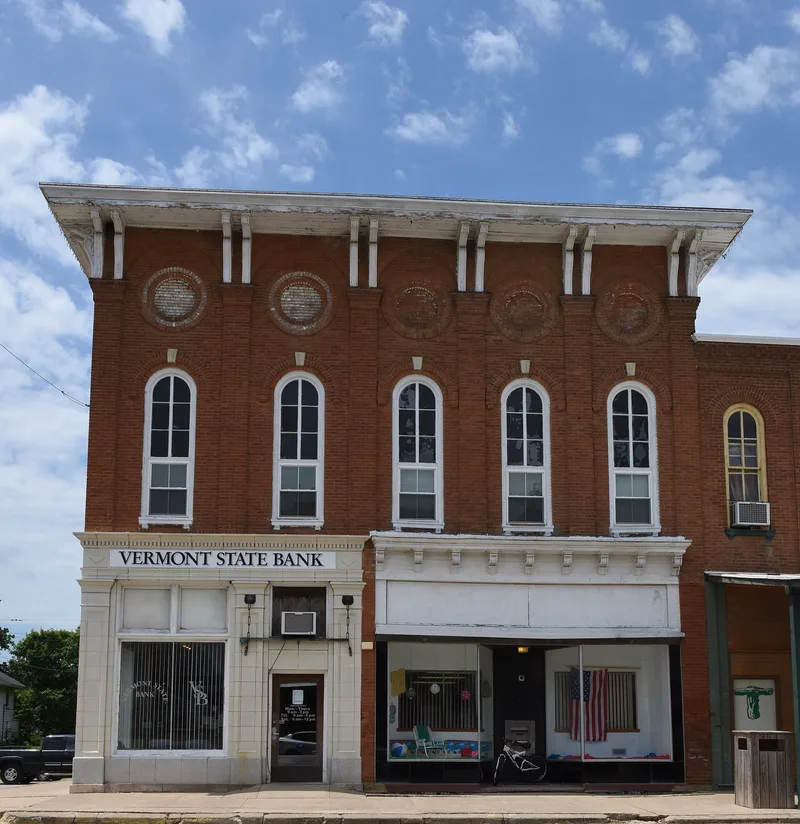
Vermont's historic downtown is a four-block commercial district in southwestern Fulton County, Illinois, about 60 miles southwest of Peoria. It centers on North Main Street and the public square, a park laid out in the village's original plat that hosted circuses, speeches, rallies and fairs. Most of the 25 contributing resources are red brick buildings of one or two stories, built from the 1850s through 1951 in Greek Revival, Italianate, Late Victorian and Commercial styles. Many have cast iron or pressed sheet metal storefronts, metal cornices or brick corbelling. The district grew from a settlement founded in 1832, first with frame stores, then with brick buildings after local brickyards opened in the 1850s. Pork packing, two new railroad lines and building booms in the late 1860s, early 1870s and 1890s shaped it. Fires in 1890 and 1904 prompted further rebuilding. The district also includes the previously listed Vermont Masonic Hall.
Machine-generated summary. This summary was generated by a language model from the official nomination document and has not been reviewed line by line by an editor. It may contain errors. Check the source document before relying on any detail. Source: nomination document (PDF) · catalog entry. Generated October 2026 (model claude-sonnet-5-5, prompt v1.0-2026-10-29).
| Styles | Greek Revival, Italianate, Late Victorian, Commercial, Early 20th Century |
|---|---|
| Areas of significance | Commerce, Social History, Politics/Government, Entertainment/Recreation, Architecture |
| Acreage | 7.1 |
| Boundary source | NPS cultural-resource GIS polygon |
| Full listing page | Vermont Historic District (property record) |
What listing means for this property
This is a historic district. Buildings within its boundary are either contributing (they add to the district's significance) or non-contributing. Owners of contributing income-producing buildings can claim the 20% federal rehabilitation tax credit; homeowners should look at state credits. National Register districts impose no design review by themselves; a local historic district ordinance, if one exists, does (the difference explained).
General information, not legal or tax advice. Rules change; confirm with your State Historic Preservation Office or a qualified adviser.