University of Illinois Experimental Dairy Farm Historic District

Why it's listed
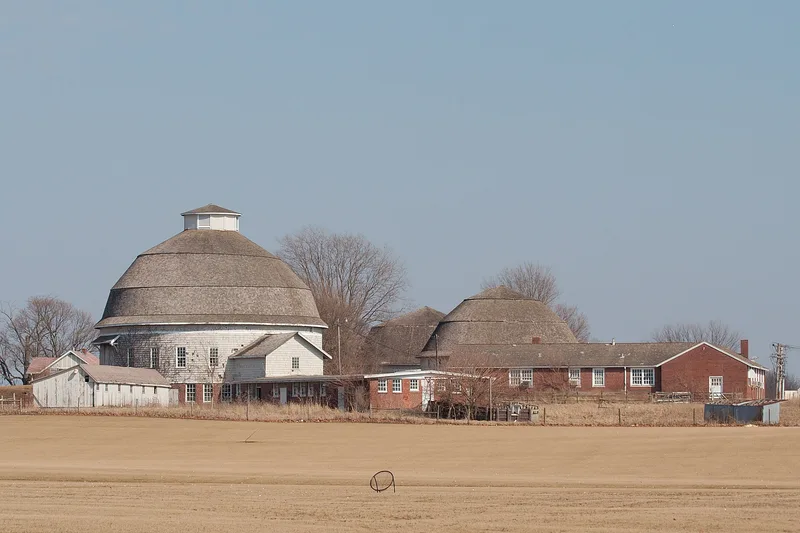
Three round dairy barns, a manager's house and a small storage building make up the University of Illinois Experimental Dairy Farm on a ridge in southwest Urbana. The barns, built in 1908, 1910 and 1912, stand within about 500 feet of one another. Two are 60 feet in diameter and the third is 70 feet, with a brick wing. The brick-founded barns have wood-shingled or wood-sided walls and gambrel or triple-slope roofs. The 1908 manager's house has Craftsman and Tudor Revival influences. The farm was a working laboratory for dairy science. Professor Fraser compared hay varieties and found timothy hay held far less digestible protein than alfalfa. Results were circulated to farmers through experiment station bulletins. Staff also studied contamination in the milk shipped to Chicago and later tested how long milk stayed good. The state recognized the district for this role in Illinois dairy research and for its round-barn design. A garage, a brick laboratory and a cattle shed are later additions.
Machine-generated summary. This summary was generated by a language model from the official nomination document and has not been reviewed line by line by an editor. It may contain errors. Check the source document before relying on any detail. Source: nomination document (PDF) · catalog entry. Generated October 2026 (model claude-sonnet-5-5, prompt v1.0-2026-10-29).
| Styles | Round Barn; Craftsman (Manager's House has Craftsman/Tudor Revival influence) |
|---|---|
| Areas of significance | Architecture, Agriculture |
| Acreage | 6 |
| Boundary source | NPS cultural-resource GIS polygon |
| Full listing page | University of Illinois Experimental Dairy Farm Historic District (property record) |
What listing means for this property
This is a historic district. Buildings within its boundary are either contributing (they add to the district's significance) or non-contributing. Owners of contributing income-producing buildings can claim the 20% federal rehabilitation tax credit; homeowners should look at state credits. National Register districts impose no design review by themselves; a local historic district ordinance, if one exists, does (the difference explained).
General information, not legal or tax advice. Rules change; confirm with your State Historic Preservation Office or a qualified adviser.