St. Louis Street Historic District

Why it's listed
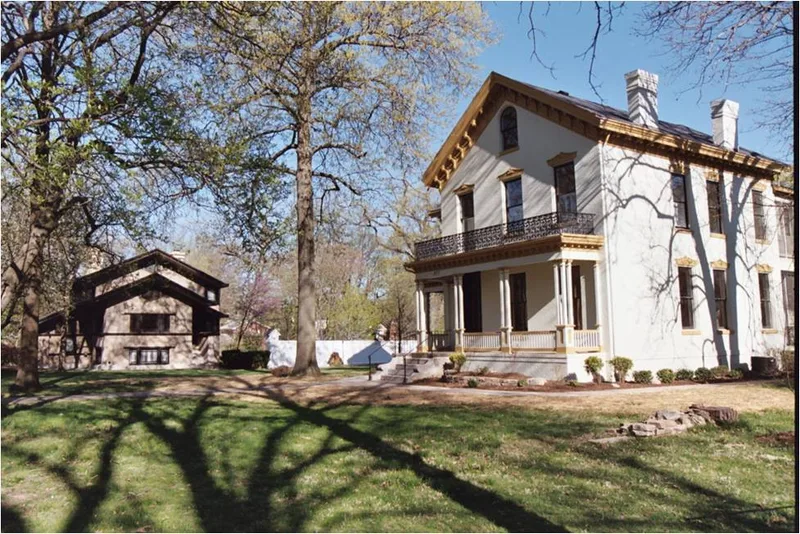
St. Louis Street in Edwardsville began as a service road for small farms and the county fairgrounds, then grew into the city's most fashionable residential address. Wealthy families built large homes on the south side by 1870, and an 1883 lot sale opened the north side to closer-spaced houses. Railroad-driven prosperity brought Queen Anne, Chateauesque, Italianate and Classical Revival homes, followed by Prairie School, Craftsman, Colonial Revival and bungalow designs through the 1930s. The district includes a Prairie School house by Walter Burley Griffin, built in 1909-10 for his brother Ralph, and Hadley House, home of Congressman W.F.L. Hadley and now school district offices. Other houses are tied to E. M. West, a delegate to the 1848 Illinois Constitutional Convention, and to local architects such as Charles Spillman and Michael B. Kane. Large lawns, mature trees and a winding street give the area a park-like character, and it reads as a compact record of changing American house styles.
Machine-generated summary. This summary was generated by a language model from the official nomination document and has not been reviewed line by line by an editor. It may contain errors. Check the source document before relying on any detail. Source: nomination document (PDF) · catalog entry. Generated October 2026 (model claude-sonnet-5-5, prompt v1.0-2026-10-29).
| Period of significance | 1879-1940 |
|---|---|
| Styles | Queen Anne, Prairie School, Chateauesque, Italianate, Classical and Colonial Revival, Craftsman, bungalow, and other styles |
| Areas of significance | Architecture |
| Acreage | 35 |
| Boundary source | NPS cultural-resource GIS polygon |
| Full listing page | St. Louis Street Historic District (property record) |
What listing means for this property
This is a historic district. Buildings within its boundary are either contributing (they add to the district's significance) or non-contributing. Owners of contributing income-producing buildings can claim the 20% federal rehabilitation tax credit; homeowners should look at state credits. National Register districts impose no design review by themselves; a local historic district ordinance, if one exists, does (the difference explained).
General information, not legal or tax advice. Rules change; confirm with your State Historic Preservation Office or a qualified adviser.