Springdale Cemetery

Why it's listed
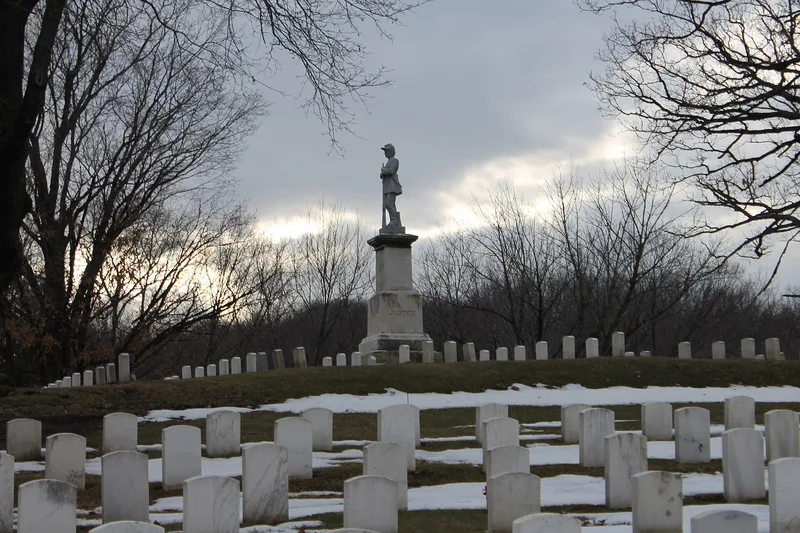
Springdale Cemetery is a public, non-sectarian burial ground of roughly 225 acres on a bluff above the Illinois River in Peoria. Opened in 1855, it now holds almost 78,000 burials, among them city founders, farmers, workers, distillers and soldiers from every American war. About seven miles of winding roads follow the valleys and hills, with sections named for the trees that grew there, and a native tallgrass oak savanna is recognized as a state natural heritage landmark. The district includes fifteen private mausolea built from 1887 onward in Classical Revival, Romanesque and other styles, a public mausoleum of Barre granite opened in 1929, a Craftsman-influenced stone gatehouse from 1900, two iron king post bridges and numerous monuments. Soldiers' Hill displays Civil War Parrott rifles. The cemetery was listed for its landscape, architecture and the many people from Peoria's history buried there.
Machine-generated summary. This summary was generated by a language model from the official nomination document and has not been reviewed line by line by an editor. It may contain errors. Check the source document before relying on any detail. Source: nomination document (PDF) · catalog entry. Generated October 2026 (model claude-sonnet-5-5, prompt v1.0-2026-10-29).
| Styles | Late Victorian/Romanesque; Late 19th and 20th Century Revivals/Classical Revival and Late Gothic Revival; Bungalow/Craftsman |
|---|---|
| Areas of significance | Landscape Architecture, Architecture, Art |
| Boundary source | NPS cultural-resource GIS polygon |
| Full listing page | Springdale Cemetery (property record) |
What listing means for this property
This is a historic district. Buildings within its boundary are either contributing (they add to the district's significance) or non-contributing. Owners of contributing income-producing buildings can claim the 20% federal rehabilitation tax credit; homeowners should look at state credits. National Register districts impose no design review by themselves; a local historic district ordinance, if one exists, does (the difference explained).
General information, not legal or tax advice. Rules change; confirm with your State Historic Preservation Office or a qualified adviser.