Spring Valley House-Sulfur Springs Hotel

The National Park Service has not published a boundary polygon for this district; the map shows the listed properties inside it and the district's reference point.
Why it's listed
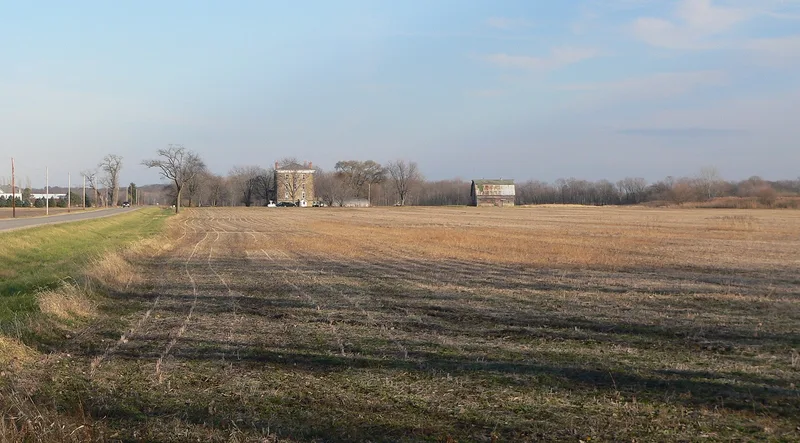
Dee Bennett Road, just outside Utica in LaSalle County, Illinois, runs past a four-story limestone hotel built around 1849 between the Illinois River and the old stage coach road. Known as the Spring Valley House or Sulphur Springs Hotel, and later as the "Half-Way House," it measures about 63 by 42 feet and has a hip roof, coursed rubble walls and a central ashlar pavilion on the north front. Inside are guest rooms, a fourth-floor ballroom and small "sarsaparilla rooms" for drinks. Natural springs on the site fed a spring house that still supplies water. The hotel served stage travelers and also operated as a resort, drawing visitors for the sulphur waters and for entertainers, including violinist Ole Bull. Railroads and the canal reduced stage traffic, and the hotel fell out of use around 1862. It is considered important for its place in regional commerce and transportation and as an example of early limestone construction with classical features. It is now a private home.
Machine-generated summary. This summary was generated by a language model from the official nomination document and has not been reviewed line by line by an editor. It may contain errors. Check the source document before relying on any detail. Source: nomination document (PDF) · catalog entry. Generated October 2026 (model claude-sonnet-5-5, prompt v1.0-2026-10-29).
| Period of significance | ca. 1849-1862 |
|---|---|
| Styles | Vernacular limestone construction with Greek Revival and Georgian-influenced classical elements |
| Areas of significance | Commerce, Transportation, Architecture |
| Acreage | 0.9 |
| Boundary source | not published |
| Full listing page | Spring Valley House-Sulfur Springs Hotel (property record) |
What listing means for this property
This is a historic district. Buildings within its boundary are either contributing (they add to the district's significance) or non-contributing. Owners of contributing income-producing buildings can claim the 20% federal rehabilitation tax credit; homeowners should look at state credits. National Register districts impose no design review by themselves; a local historic district ordinance, if one exists, does (the difference explained).
General information, not legal or tax advice. Rules change; confirm with your State Historic Preservation Office or a qualified adviser.