South Side German Historic District (Boundary Increase)

Why it's listed
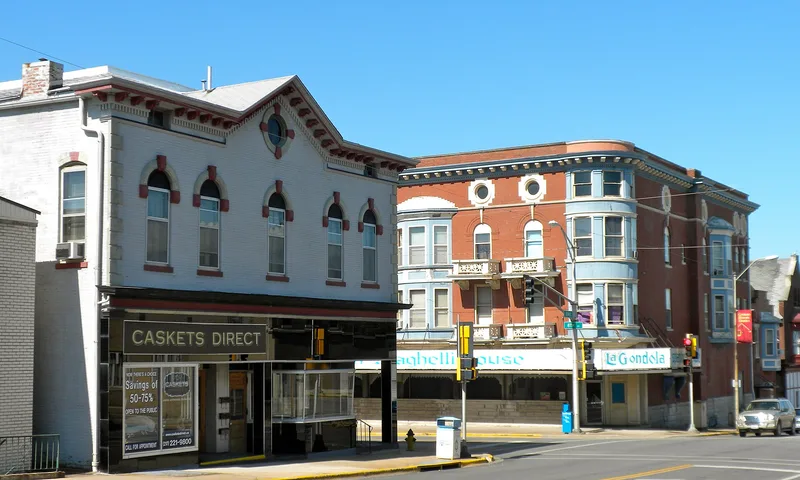
This boundary increase adds roughly 47 blocks of south Quincy to an existing German immigrant neighborhood, extending it south of Jefferson Street. The area has always been mainly residential, with small corner commercial buildings and a few surviving industrial remnants such as a bakery and a furniture factory. Development was uneven, with some houses predating the 1856 platting of John Wood's Addition. Frame construction is more common here than in the original district, and brick falls below half of the buildings. Typical houses are modest vernacular cottages and I-houses, followed by L-houses in the 1880s, with a few standouts such as the Italianate Ruff Brothers house at 1137-1139 Adams and late Queen Anne homes linked to the Ruff family. St. Pauli German Evangelical Church (1874) and St. Mary's Church (1892) anchor their neighborhoods. Original footprints, rooflines and window openings largely survive, and many additions were made during the historic period. Most of the 859 contributing buildings are dwellings and outbuildings.
Machine-generated summary. This summary was generated by a language model from the official nomination document and has not been reviewed line by line by an editor. It may contain errors. Check the source document before relying on any detail. Source: nomination document (PDF) · catalog entry. Generated October 2026 (model claude-sonnet-5-5, prompt v1.0-2026-10-29).
| Styles | Mid 19th Century; Late Victorian; Late 19th and Early 20th Century American Movements |
|---|---|
| Areas of significance | European, Architecture, Exploration/Settlement |
| Acreage | 147 |
| Boundary source | NPS cultural-resource GIS polygon |
| Full listing page | South Side German Historic District (Boundary Increase) (property record) |
What listing means for this property
This is a historic district. Buildings within its boundary are either contributing (they add to the district's significance) or non-contributing. Owners of contributing income-producing buildings can claim the 20% federal rehabilitation tax credit; homeowners should look at state credits. National Register districts impose no design review by themselves; a local historic district ordinance, if one exists, does (the difference explained).
General information, not legal or tax advice. Rules change; confirm with your State Historic Preservation Office or a qualified adviser.