South Side German Historic District

Why it's listed
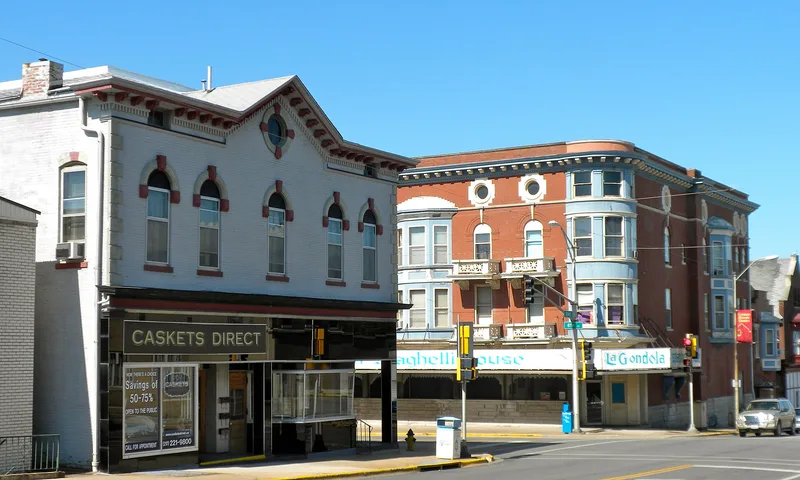
South of downtown Quincy, Illinois, this district covers part or all of fifty-two blocks once at the center of the city's German immigrant community. German settlers arrived in the 1830s, and a large wave followed in the early 1850s, filling plats added to the city through the 1840s and 1850s. The area is mostly residential, made up of brick and frame cottages and two-story houses built on local limestone foundations. Many houses sit at the edge of their lots, a pattern linked in oral tradition to German settlement. Washington Street between 5th and 8th Streets holds the most contiguous pre-Civil War housing in the city. State Street developed as a commercial axis from the 1850s, and the Dick Brothers Brewery and its workers' housing formed a factory neighborhood that outlasted the plant's 1953 closing. A railroad and industrial corridor along 6th Street separates the district from neighborhoods to the west. The district includes 757 contributing buildings.
Machine-generated summary. This summary was generated by a language model from the official nomination document and has not been reviewed line by line by an editor. It may contain errors. Check the source document before relying on any detail. Source: nomination document (PDF) · catalog entry. Generated October 2026 (model claude-sonnet-5-5, prompt v1.0-2026-10-29).
| Styles | Mid-19th Century; Late Victorian; Late 19th and Early 20th Century American Movements |
|---|---|
| Areas of significance | European, Exploration/Settlement, Architecture |
| Acreage | 208 |
| Boundary source | NPS cultural-resource GIS polygon |
| Full listing page | South Side German Historic District (property record) |
What listing means for this property
This is a historic district. Buildings within its boundary are either contributing (they add to the district's significance) or non-contributing. Owners of contributing income-producing buildings can claim the 20% federal rehabilitation tax credit; homeowners should look at state credits. National Register districts impose no design review by themselves; a local historic district ordinance, if one exists, does (the difference explained).
General information, not legal or tax advice. Rules change; confirm with your State Historic Preservation Office or a qualified adviser.