South Park Manor Historic District

Why it's listed
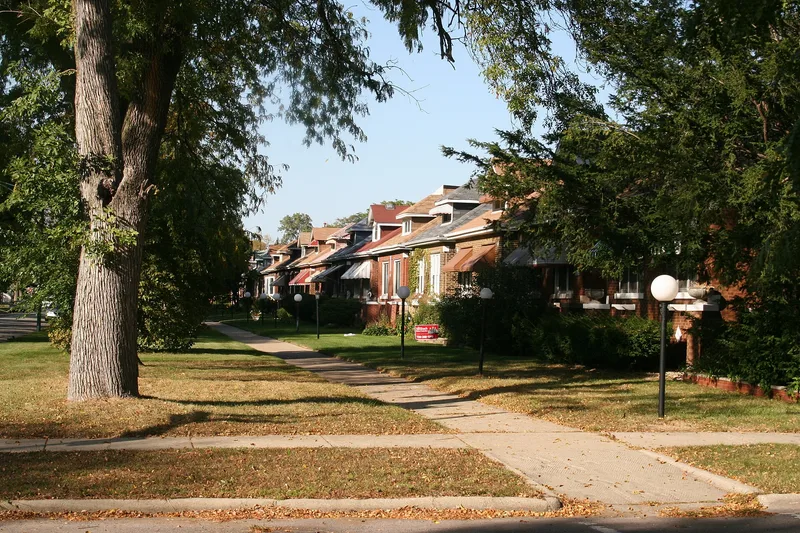
Located about ten miles south of downtown Chicago's Loop, this residential district covers many blocks between 75th and 79th Streets, bounded by South King Drive and South State Street. Quiet, tree-lined streets hold one-and-a-half story brick bungalows built mainly from 1915 to 1927, mixed with two-flats and small apartment buildings, plus Ruggles Elementary School. The houses represent the Chicago bungalow, a regional variation of the national bungalow style, with low-pitched roofs, brick walls, limestone accents, full basements and horizontal massing. Decorative brick patterns, art glass windows and limestone window-box brackets give individual houses variety within a uniform building line. The district counts 264 contributing buildings and 54 noncontributing ones, which are mostly altered bungalows, apartment buildings or later residences. Its significance rests on the cohesion and integrity of this bungalow streetscape, which remains in very good condition, with only minor alterations such as replacement windows on most buildings.
Machine-generated summary. This summary was generated by a language model from the official nomination document and has not been reviewed line by line by an editor. It may contain errors. Check the source document before relying on any detail. Source: nomination document (PDF) · catalog entry. Generated October 2026 (model claude-sonnet-5-5, prompt v1.0-2026-10-29).
| Styles | Other: Chicago Bungalow |
|---|---|
| Areas of significance | Community Planning and Development, Architecture |
| Acreage | 144 |
| Boundary source | NPS cultural-resource GIS polygon |
| Full listing page | South Park Manor Historic District (property record) |
What listing means for this property
This is a historic district. Buildings within its boundary are either contributing (they add to the district's significance) or non-contributing. Owners of contributing income-producing buildings can claim the 20% federal rehabilitation tax credit; homeowners should look at state credits. National Register districts impose no design review by themselves; a local historic district ordinance, if one exists, does (the difference explained).
General information, not legal or tax advice. Rules change; confirm with your State Historic Preservation Office or a qualified adviser.