Seventh Street Commercial Historic District

Why it's listed
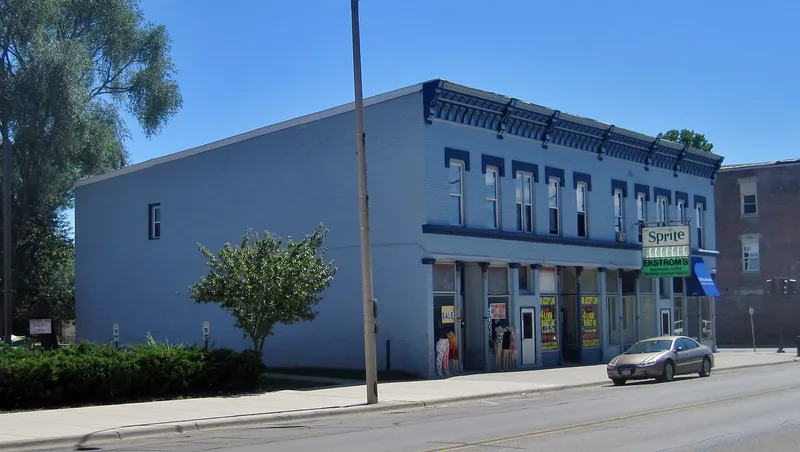
Seventh Street in Rockford, Illinois, was the commercial spine of the city's Swedish community, and the district around it holds 92 properties, 83 of which contribute to its character. Located southeast of the twin downtowns on either side of the Rock River, it is almost entirely commercial, with a few houses and a cluster of industrial and warehouse buildings at the south end near Keith Creek. Buildings date from about 1870 to 1956 and are mostly brick, with terra cotta, stone and tile detailing. Styles move from Italianate in the south to Romanesque Revival in the middle and Beaux-Arts, Classical Revival and Tudor Revival toward the north. Storefront alterations are common, but upper-story window patterns largely survive. The area grew alongside the furniture factories on Railroad Avenue, where Swedish immigrants founded and staffed many firms. Its shops, banks and meeting halls served that community and influenced commerce across the city. Two later buildings by architect Gilbert A. Johnson were included for showing continued Swedish enterprise.
Machine-generated summary. This summary was generated by a language model from the official nomination document and has not been reviewed line by line by an editor. It may contain errors. Check the source document before relying on any detail. Source: nomination document (PDF) · catalog entry. Generated October 2026 (model claude-sonnet-5-5, prompt v1.0-2026-10-29).
| Styles | Commercial Style, Classical Revival, Italianate |
|---|---|
| Areas of significance | Commerce, European, Industry, Architecture |
| Acreage | 26 |
| Boundary source | NPS cultural-resource GIS polygon |
| Full listing page | Seventh Street Commercial Historic District (property record) |
What listing means for this property
This is a historic district. Buildings within its boundary are either contributing (they add to the district's significance) or non-contributing. Owners of contributing income-producing buildings can claim the 20% federal rehabilitation tax credit; homeowners should look at state credits. National Register districts impose no design review by themselves; a local historic district ordinance, if one exists, does (the difference explained).
General information, not legal or tax advice. Rules change; confirm with your State Historic Preservation Office or a qualified adviser.