Scoville Place

Why it's listed
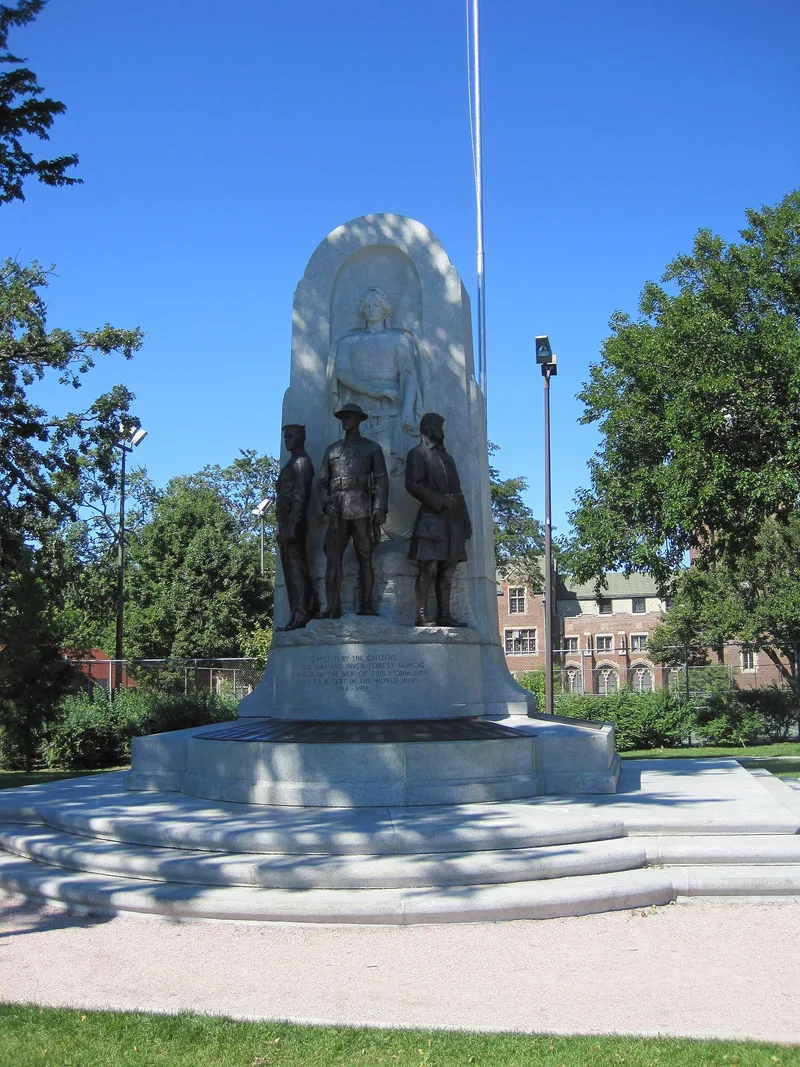
Scoville Park occupies a 4.6-acre block at the northwest corner of Lake Street and Oak Park Avenue in Oak Park, Illinois. The land was bought in 1857 by James Wilmarth Scoville from Joseph Kettlestrings, and Scoville built a large Stick style mansion on the hill. In 1912 the newly formed Park District acquired the property, demolished the buildings, and built a park from a 1913 design by Jens Jensen. It became Oak Park's first public park. Jensen kept most of the large existing trees, laid out curving paths that follow the topography, and planted dense edges of native shrubs around open spaces. Active recreation was placed on the flat north end, with a meadow to the south and a knoll at the center. Later additions include a 1925 World War I monument, a 1936 shelter and comfort station, and a reconstructed Horse Show Fountain. The park is listed as a district with six contributing and four noncontributing resources.
Machine-generated summary. This summary was generated by a language model from the official nomination document and has not been reviewed line by line by an editor. It may contain errors. Check the source document before relying on any detail. Source: nomination document (PDF) · catalog entry. Generated October 2026 (model claude-sonnet-5-5, prompt v1.0-2026-10-29).
| Styles | Other: Prairie School of Landscape Architecture; Other: Arts & Crafts |
|---|---|
| Areas of significance | Entertainment/Recreation, Landscape Architecture, Art |
| Acreage | 4.6 |
| Boundary source | NPS cultural-resource GIS polygon |
| Full listing page | Scoville Place (property record) |
What listing means for this property
This is a historic district. Buildings within its boundary are either contributing (they add to the district's significance) or non-contributing. Owners of contributing income-producing buildings can claim the 20% federal rehabilitation tax credit; homeowners should look at state credits. National Register districts impose no design review by themselves; a local historic district ordinance, if one exists, does (the difference explained).
General information, not legal or tax advice. Rules change; confirm with your State Historic Preservation Office or a qualified adviser.