Scales Mound Historic District

Why it's listed
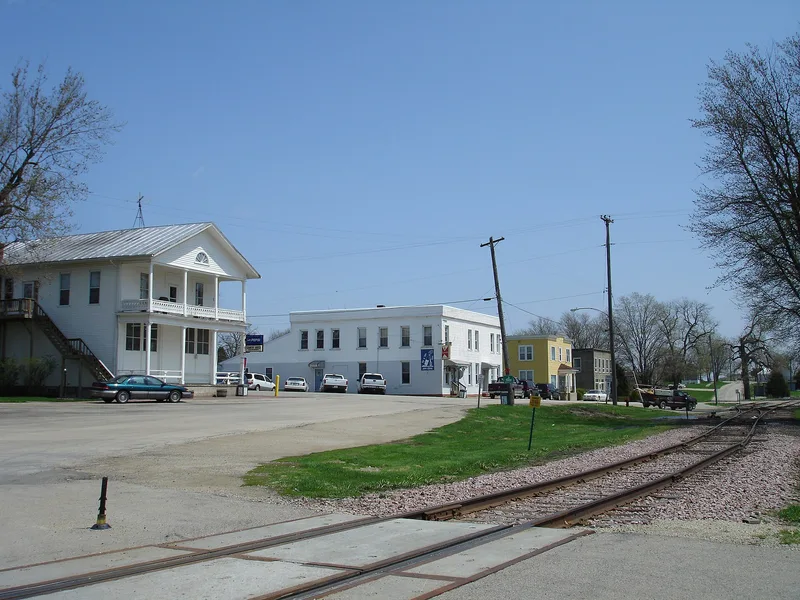
Scales Mound is a small agricultural village in rural Jo Daviess County, Illinois, in the Driftless Area about ten miles east of Galena. It was laid out in 1853 along the new Illinois Central Railroad, and the tracks shaped its growth, with commercial buildings, warehouses and a depot clustered on either side. Most of the district's houses are modest 1 1/2 to 2-story frame buildings erected between 1880 and 1925, mixing scaled-down Queen Anne, Eastlake and Shingle Style details. Many frame garages, stables, privies and barns survive behind them, and open yards, closed alleys and grassed-over street sections give the village a spacious feel. The district covers the whole village and counts 184 contributing buildings and one steel fire siren. It was listed for its collection of vernacular architecture and for what the buildings show about the agricultural, commercial and social life of a northern Illinois farm community between about 1855 and 1930.
Machine-generated summary. This summary was generated by a language model from the official nomination document and has not been reviewed line by line by an editor. It may contain errors. Check the source document before relying on any detail. Source: nomination document (PDF) · catalog entry. Generated October 2026 (model claude-sonnet-5-5, prompt v1.0-2026-10-29).
| Period of significance | c.1855-1930 |
|---|---|
| Styles | Greek Revival, Queen Anne, Stick/Eastlake |
| Areas of significance | Commerce, Agriculture, Architecture |
| Acreage | 96 |
| Boundary source | NPS cultural-resource GIS polygon |
| Full listing page | Scales Mound Historic District (property record) |
What listing means for this property
This is a historic district. Buildings within its boundary are either contributing (they add to the district's significance) or non-contributing. Owners of contributing income-producing buildings can claim the 20% federal rehabilitation tax credit; homeowners should look at state credits. National Register districts impose no design review by themselves; a local historic district ordinance, if one exists, does (the difference explained).
General information, not legal or tax advice. Rules change; confirm with your State Historic Preservation Office or a qualified adviser.