Rock Island Arsenal

Why it's listed
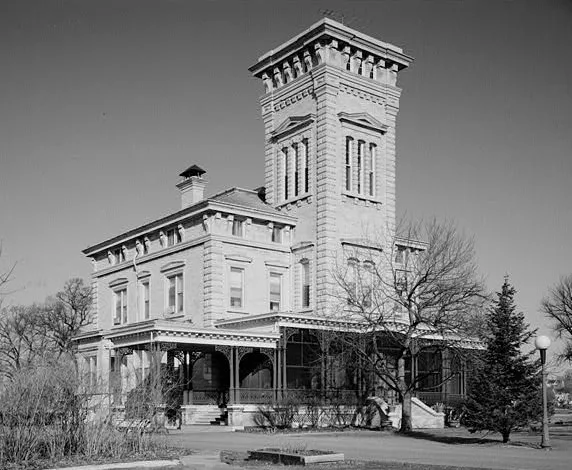
Rock Island Arsenal occupies a three-mile-long island in the Mississippi River between Rock Island and Moline, Illinois, and Davenport, Iowa. Congress established it in 1862, and it still operates as a military installation covering 945 acres. Its core includes ten massive limestone shops built from 1866 to 1876, with walls up to three feet thick and cast-iron columns, plus a Clock Tower from the 1860s and large stone officers' quarters built in the 1870s along the north shore. Later World War I and II buildings, mostly concrete, extend to the west. The island's history reaches further back. Fort Armstrong stood here from 1816 to 1836, soldiers in the Black Hawk War passed through, and George Davenport built an early permanent house in 1833. A Confederate prison operated from 1863 to 1865, and a cemetery remains. The first railroad bridge across the Mississippi had a terminal on the island. Commander Thomas J. Rodman, known for the Rodman Gun, led the arsenal from 1863 to 1871.
Machine-generated summary. This summary was generated by a language model from the official nomination document and has not been reviewed line by line by an editor. It may contain errors. Check the source document before relying on any detail. Source: nomination document (PDF) · catalog entry. Generated October 2026 (model claude-sonnet-5-5, prompt v1.0-2026-10-29).
| Styles | Not named; the 1877 commanding officer said no name could be given to the Clock Tower's exterior. Buildings are mainly stone, with later concrete structures. |
|---|---|
| Areas of significance | Industry, Prehistoric, Historic - Aboriginal, Military, Engineering, Transportation, Exploration/Settlement, Science, Invention |
| Acreage | 945 |
| Boundary source | NPS cultural-resource GIS polygon |
| Full listing page | Rock Island Arsenal (property record) |
What listing means for this property
This is a historic district. Buildings within its boundary are either contributing (they add to the district's significance) or non-contributing. Owners of contributing income-producing buildings can claim the 20% federal rehabilitation tax credit; homeowners should look at state credits. National Register districts impose no design review by themselves; a local historic district ordinance, if one exists, does (the difference explained).
General information, not legal or tax advice. Rules change; confirm with your State Historic Preservation Office or a qualified adviser.