Riverbank Laboratories

Why it's listed
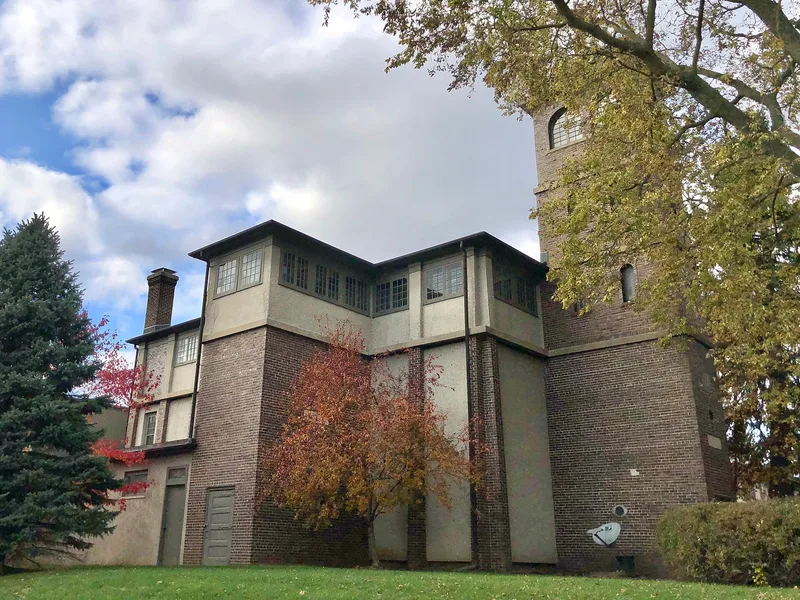
Riverbank Laboratories is a small district on Batavia Avenue in Geneva, Illinois, once part of the roughly 300-acre Riverbank estate of Colonel George and Nelle Fabyan beside the Fox River. Its main elements are the Lodge and Studio, the Engineering Building and the Sabine Acoustical Laboratory. The Lodge is a two-and-a-half-story frame Craftsman bungalow with a steep gabled roof, a limestone foundation and a long enclosed south porch. The attached Studio, built by the Fabyans in 1917 as an administration building, has an English Arts and Crafts character. The district matters chiefly for the science done here. Paul Sabine directed research in architectural acoustics and helped standardize acoustical testing, and the laboratory became the official testing site for the Acoustical Materials Association. Bert Eisenhour led the tuning fork work, including a patented temperature-compensated fork in 1932. After the property was sold in 1999, the Lodge and Studio were rehabilitated as homes, while the acoustical laboratory remains in use.
Machine-generated summary. This summary was generated by a language model from the official nomination document and has not been reviewed line by line by an editor. It may contain errors. Check the source document before relying on any detail. Source: nomination document (PDF) · catalog entry. Generated October 2026 (model claude-sonnet-5-5, prompt v1.0-2026-10-29).
| Styles | Bungalow/Craftsman |
|---|---|
| Areas of significance | Communications, Invention, Architecture |
| Acreage | 3.5 |
| Boundary source | NPS cultural-resource GIS polygon |
| Full listing page | Riverbank Laboratories (property record) |
What listing means for this property
This is a historic district. Buildings within its boundary are either contributing (they add to the district's significance) or non-contributing. Owners of contributing income-producing buildings can claim the 20% federal rehabilitation tax credit; homeowners should look at state credits. National Register districts impose no design review by themselves; a local historic district ordinance, if one exists, does (the difference explained).
General information, not legal or tax advice. Rules change; confirm with your State Historic Preservation Office or a qualified adviser.