Riis, Jacob A., Park

Why it's listed
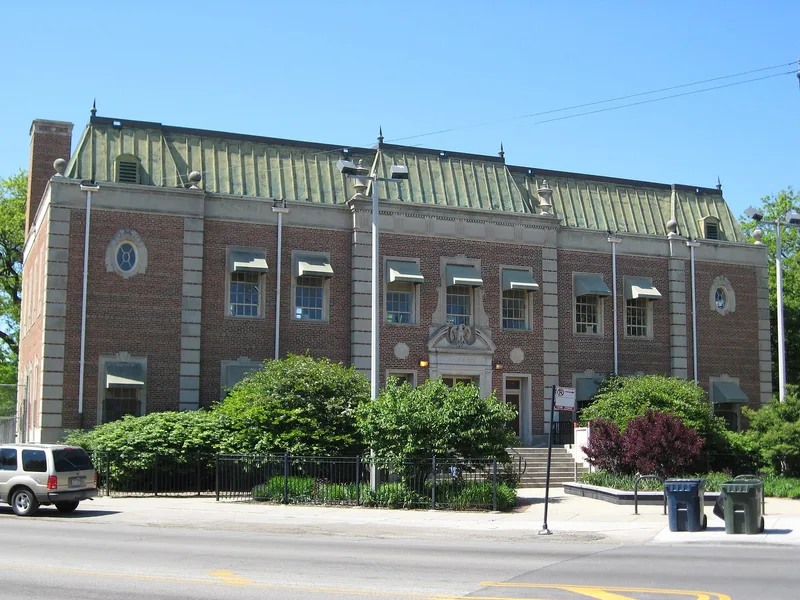
Jacob A. Riis Park occupies 56.84 acres on Chicago's northwest side. The land was bought in 1916 and named for the reformer, journalist and author Jacob A. Riis, but little was built until 1928. Residents petitioned for years for a fieldhouse, ball fields and other facilities. Walter W. Ahlschlager designed the red brick fieldhouse, completed in 1929, which combines Georgian Revival and French Renaissance elements. After Chicago's park commissions merged into the Chicago Park District in 1934, Works Progress Administration funds paid for a comfort station, swimming pool and pool house, pergola, service building, tennis courts and a running track. Alfred Caldwell designed the western half as a naturalistic landscape of meadows, a limestone-edged lagoon and a wall of trees called Crabapple Lane, set along an ancient glacial shoreline ridge. The activity-oriented eastern half and the wooded western half remain largely as planned. A boulder monument to Riis, in place by 1932, also contributes to the district.
Machine-generated summary. This summary was generated by a language model from the official nomination document and has not been reviewed line by line by an editor. It may contain errors. Check the source document before relying on any detail. Source: nomination document (PDF) · catalog entry. Generated October 2026 (model claude-sonnet-5-5, prompt v1.0-2026-10-29).
| Period of significance | 1928-1944 |
|---|---|
| Styles | Late 19th and 20th Century Revivals/Georgian Revival; French Renaissance |
| Areas of significance | Landscape Architecture, Architecture, Social History, Entertainment/Recreation |
| Acreage | 56.8 |
| Boundary source | NPS cultural-resource GIS polygon |
| Full listing page | Riis, Jacob A., Park (property record) |
What listing means for this property
This is a historic district. Buildings within its boundary are either contributing (they add to the district's significance) or non-contributing. Owners of contributing income-producing buildings can claim the 20% federal rehabilitation tax credit; homeowners should look at state credits. National Register districts impose no design review by themselves; a local historic district ordinance, if one exists, does (the difference explained).
General information, not legal or tax advice. Rules change; confirm with your State Historic Preservation Office or a qualified adviser.