Quincy Northwest Historic District

Why it's listed
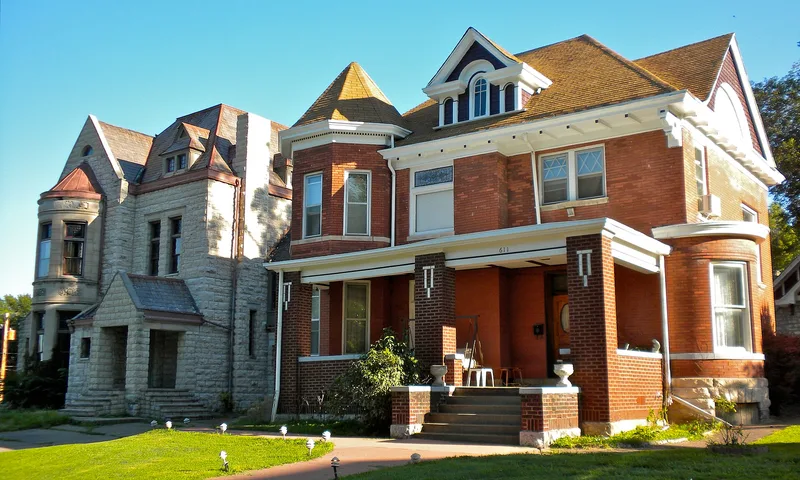
Quincy's Northwest neighborhood is a mixed-use district of roughly 105 city blocks, running twelve blocks north from Broadway and ten blocks east from Second Street, on bluffs above the Mississippi River. It holds 1,617 contributing and 459 noncontributing resources built between about 1840 and 1950. Large mansions with carriage barns sit near simple worker's cottages, and corner groceries and saloons with upstairs apartments were scattered among the houses. Local brick, limestone and wood shaped the buildings, and the styles include Greek Revival, Gothic Revival, Italianate, Second Empire, Queen Anne, Craftsman and Prairie, along with vernacular forms such as Gabled Ell, Shotgun, Four Square and Bungalow. The district was listed for its architecture, representing the full range of building types from the wealthiest businessman's house to the laborer's cottage. It also reflects Quincy's history as a river town and its long record as a self-sufficient neighborhood close to downtown, rail and river transportation.
Machine-generated summary. This summary was generated by a language model from the official nomination document and has not been reviewed line by line by an editor. It may contain errors. Check the source document before relying on any detail. Source: nomination document (PDF) · catalog entry. Generated October 2026 (model claude-sonnet-5-5, prompt v1.0-2026-10-29).
| Period of significance | 1840 to 1950 |
|---|---|
| Styles | Queen Anne, Italianate, Bungalow/Craftsman, I-house; also Greek Revival, Gothic Revival, Second Empire, Romanesque Revival, Colonial Revival, Prairie and many vernacular types |
| Areas of significance | Architecture |
| Acreage | 488 |
| Boundary source | NPS cultural-resource GIS polygon |
| Full listing page | Quincy Northwest Historic District (property record) |
What listing means for this property
This is a historic district. Buildings within its boundary are either contributing (they add to the district's significance) or non-contributing. Owners of contributing income-producing buildings can claim the 20% federal rehabilitation tax credit; homeowners should look at state credits. National Register districts impose no design review by themselves; a local historic district ordinance, if one exists, does (the difference explained).
General information, not legal or tax advice. Rules change; confirm with your State Historic Preservation Office or a qualified adviser.